If you've found an injured bird in the UK right now, here's the short answer: contain it safely, keep it warm and dark, do not feed it, and contact a wildlife rescue or vet as soon as possible. What you do in the next 10 to 30 minutes can genuinely make the difference between that bird surviving or not. This guide walks you through exactly what to do, step by step, from the moment you spot it.
What to Do With an Injured Bird in the UK Today
Marcus Chen
23 Mar 2026
First: assess the situation before you touch anything
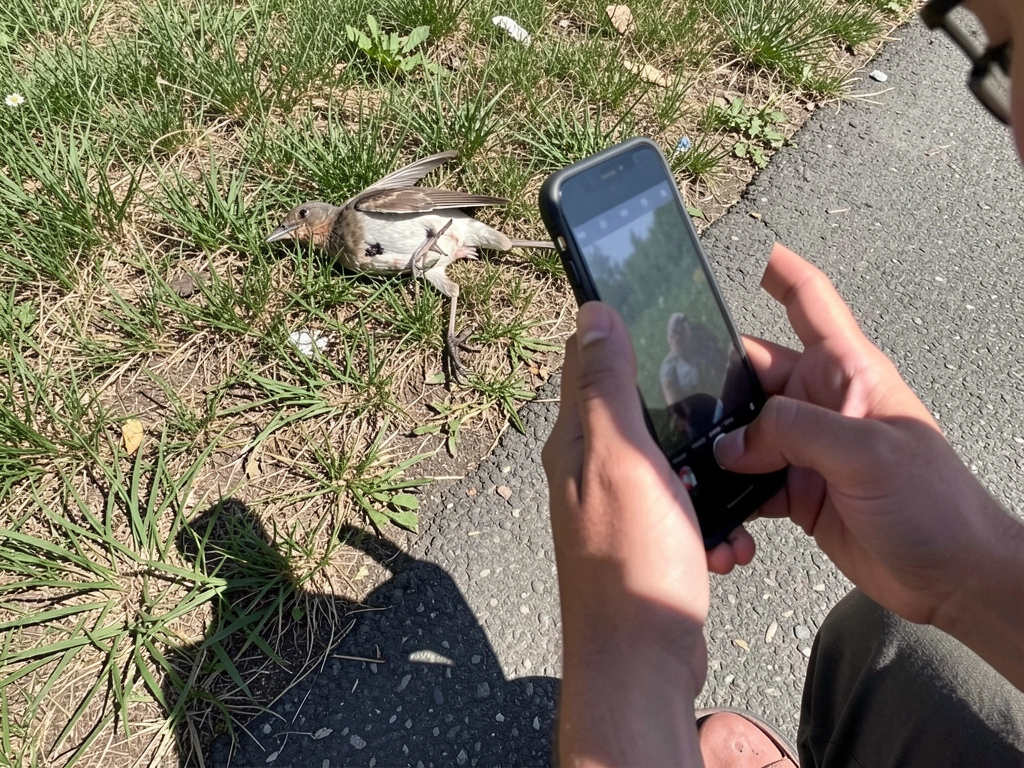
Before you go anywhere near the bird, take 30 seconds to observe it from a safe distance. You're looking for a few key things: Is it breathing? Is it bleeding visibly? Can it hold itself upright, or is it flopped on its side? Is it alert and watching you, or completely unresponsive? These observations will shape everything that follows.
A bird that is sitting still but watching you with bright eyes is in a very different situation from one that is on its back, wings splayed, not moving. The first might just be stunned. The second needs help urgently. Panting or breathing rapidly for more than two hours is a sign that professional help is needed, as is any visible wound, blood, or a wing held at an abnormal angle.
Also check whether the bird is an adult or a young bird. This matters enormously. A fledgling (partially feathered, short tail, hopping on the ground) is often perfectly normal and does not need rescuing. A nestling (tiny, mostly naked, eyes possibly still closed) found on the ground away from its nest does need help. The RSPCA has a specific decision pathway for baby birds, and we cover that in the injury scenarios section below.
One more thing before you touch anything: if the bird is dead or looks visibly sick with no obvious injury, do not handle it with bare hands. The RSPCA advises that you should not pick up dead or visibly sick wild birds, and you should wash your hands thoroughly after any contact with wild bird faeces or feathers. This is partly due to bird flu precautions that remain relevant in the UK. If the bird appears to have died or is severely ill with no clear cause, report it to the Animal and Plant Health Agency (APHA) rather than handling it yourself.
How to handle an injured bird safely (and keep it calm)
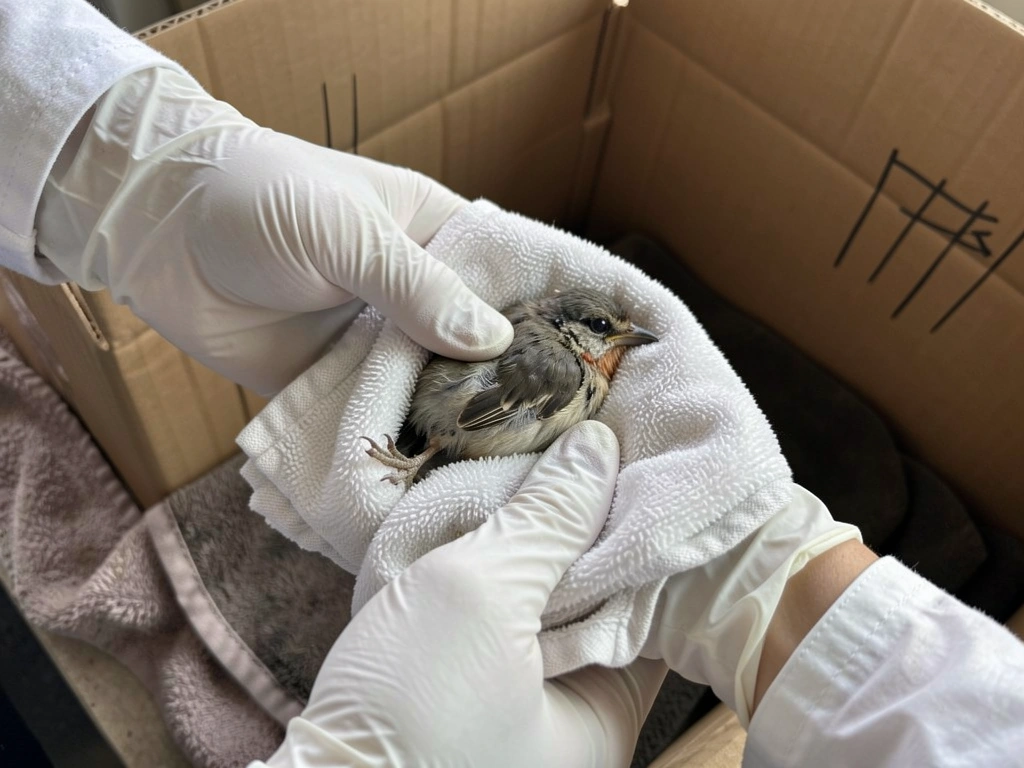
If the bird clearly needs to be moved, the goal is to minimise stress and prevent further injury, to it and to you. Stressed birds can go into shock very quickly, so the calmer and quieter you are, the better.
What to do
- Wear gloves if you have them. If not, use a folded towel, jumper, or thick cloth to pick the bird up. This protects both of you.
- Approach slowly and quietly. Cover the bird gently with the cloth and scoop it up, holding the wings lightly against the body so it can't flap and injure itself further.
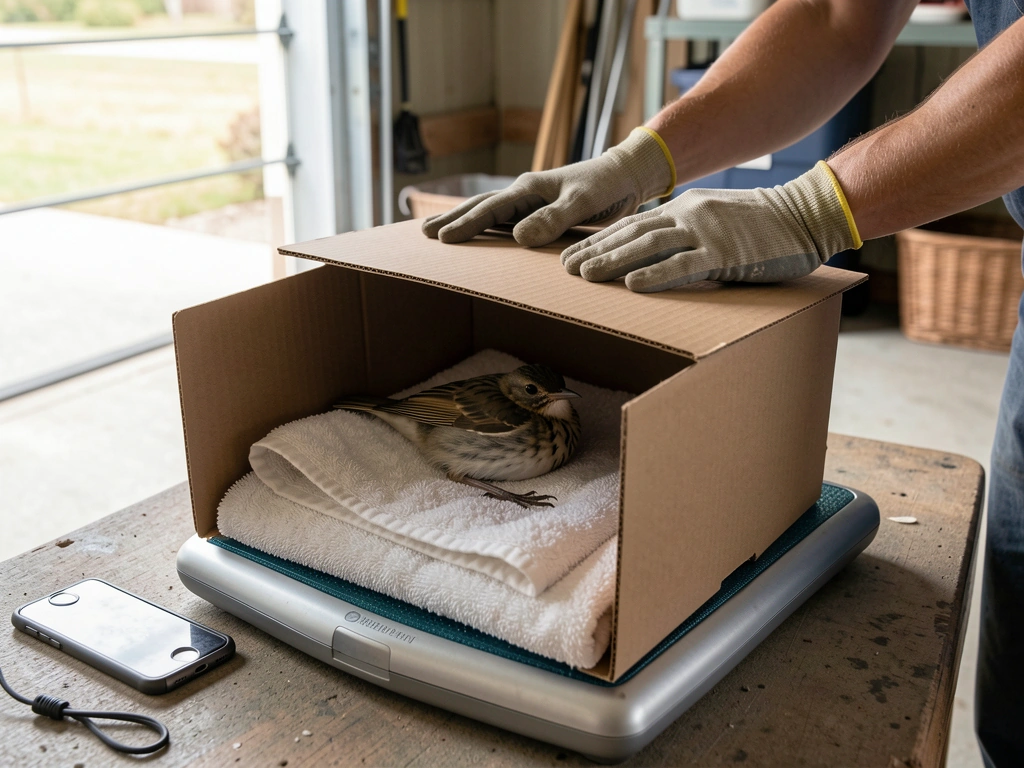
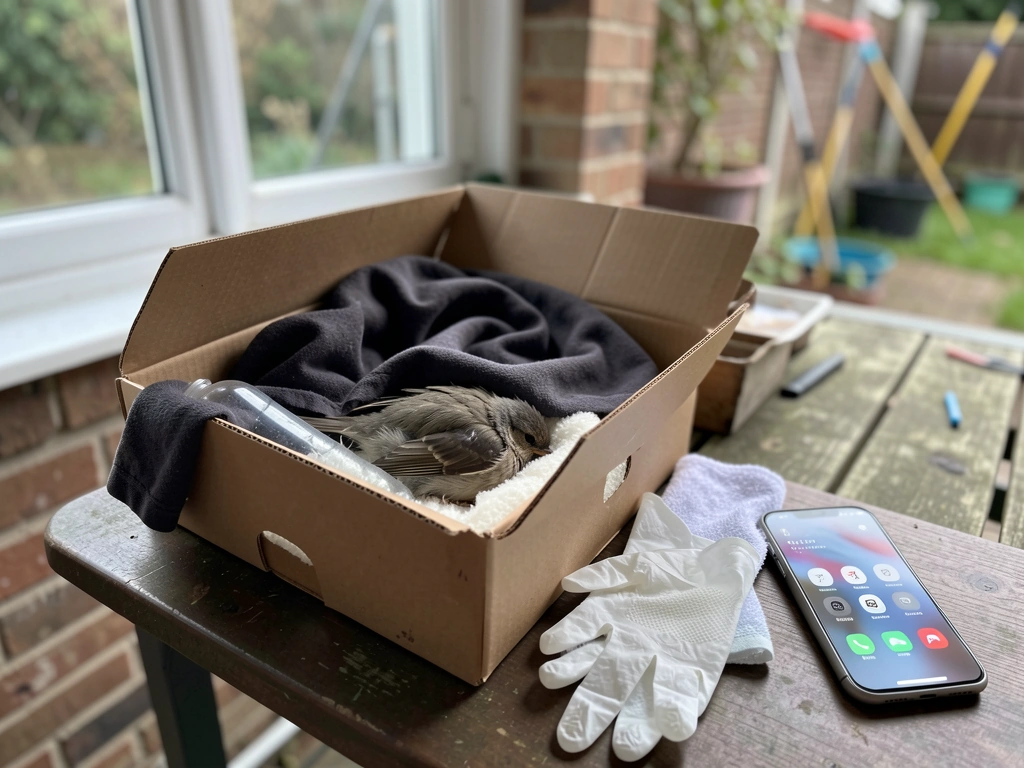
- Place it immediately into a cardboard box with ventilation holes (punch a few in the sides and lid). Line the bottom with a soft cloth or paper towel.
- Add warmth: fill a small plastic bottle or hot water bottle with warm (not hot) water, wrap it in a towel, and place it at one end of the box. The bird must be able to move away from the heat source if it gets too warm.
- Keep the box in a warm, quiet, dark room away from pets, children, and noise. Out of direct sunlight.
- Wash your hands thoroughly afterwards, even if you wore gloves.
What not to do
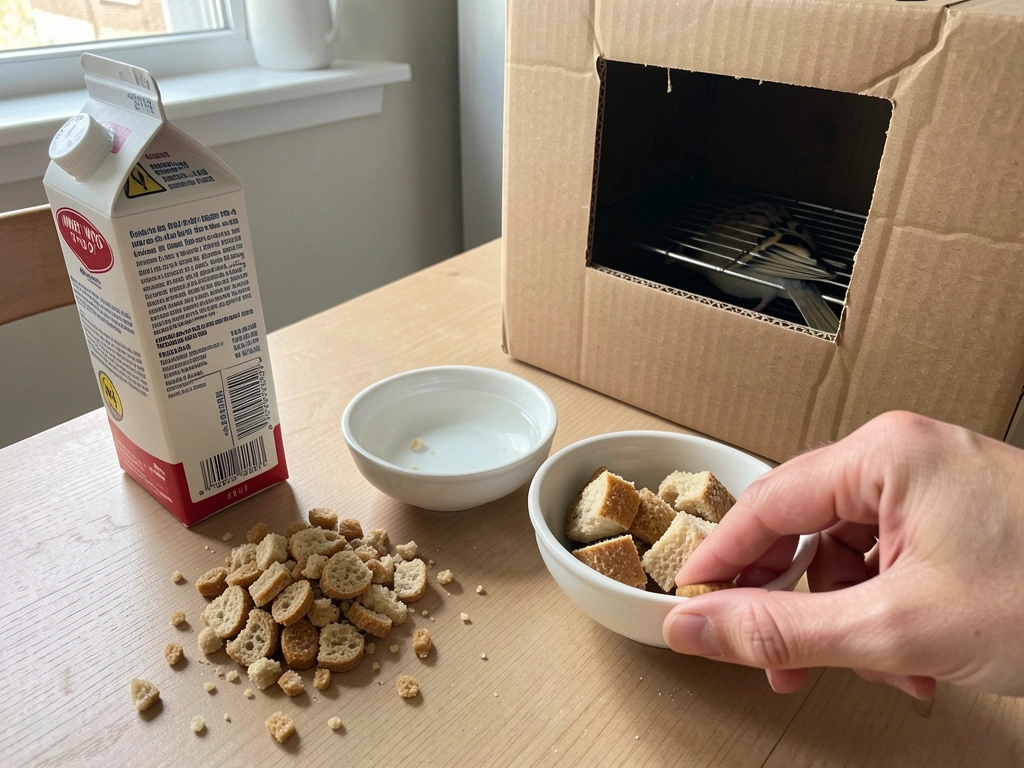
- Do not offer food or water unless a wildlife professional has specifically told you to. This includes bread, milk, worms dug up from the garden, or anything else. Forcing food or fluids into a bird's beak can cause aspiration (fluid in the lungs) and kill it.
- Never give cow's milk or alcohol to any bird or wildlife casualty.
- Do not keep the bird in a glass tank or aquarium, which can overheat rapidly.
- Do not let it wander loose in a room. It will exhaust itself trying to escape.
- Do not try to splint a wing yourself unless you have been specifically trained to do so.
- Do not attempt to rehabilitate the bird at home long-term. Even experienced wildlife carers need specialist equipment, knowledge, and in many cases a licence.
The dark, warm, quiet box approach works because it mimics the conditions a bird would instinctively seek when unwell. Darkness reduces panic. Warmth prevents shock. Quiet gives it a chance to stabilise. Think of it as the avian equivalent of lying down in a quiet room when you feel terrible.
Common injury scenarios and what to do next
Caught by a cat
This is one of the most common calls wildlife rescues receive, and it is also one of the most deceptive. A bird caught by a cat can look completely fine on the outside, with no visible wounds, and still die within 24 to 48 hours from internal infection. Cat saliva contains bacteria (particularly Pasteurella) that are highly toxic to birds. Even a single small puncture wound, invisible under feathers, can be fatal without prompt antibiotic treatment. If a cat has touched a bird at all, treat it as a veterinary emergency. Box it up and get it to a vet or wildlife rescue that same day. Do not wait to see if it 'perks up'.
Hit a window
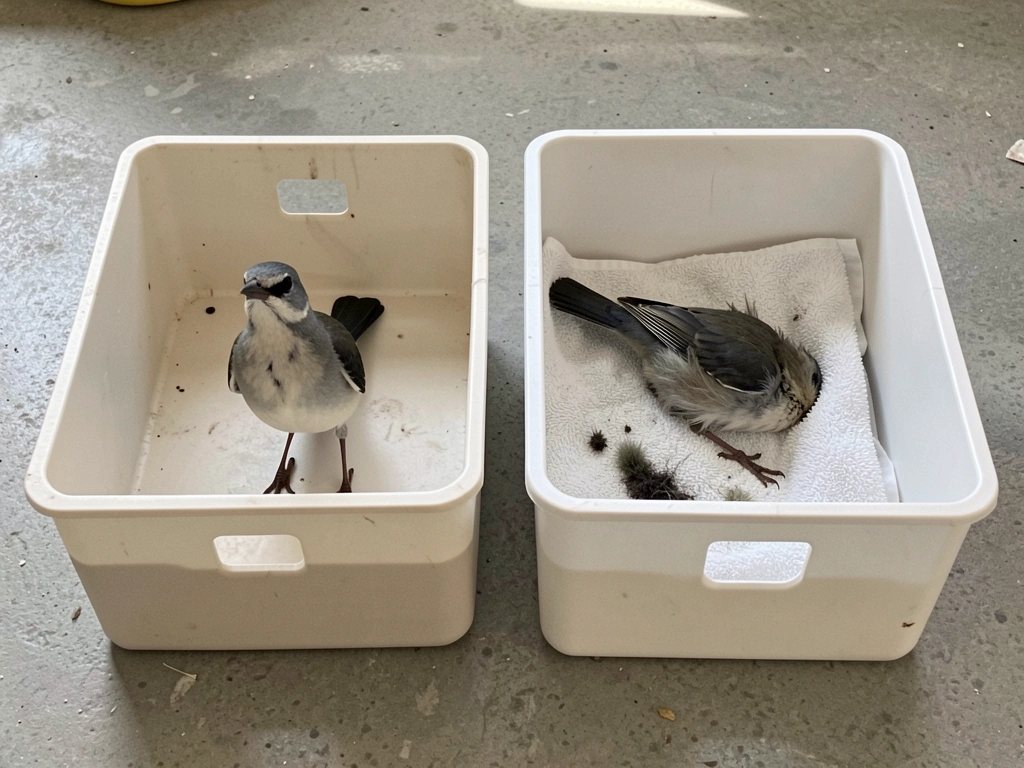
Window strikes often cause concussion rather than obvious physical injury. A bird that has flown into glass may be sitting on the ground below looking stunned, maybe slightly wobbly. The RSPCA guidance here is to monitor quietly for up to two hours. Place the bird in a dark, ventilated box somewhere warm and check it after an hour or two. Many birds recover fully from mild concussion and can be released where you found them. However, if the bird is still unable to fly, is bleeding, is breathing rapidly, or hasn't improved after two hours, contact a wildlife rescue or vet. Don't skip the box stage and just leave it on the ground, as cats and foxes will find it.
Hit by a vehicle
Any bird that has been struck by a car should be seen by a rescue or vet, even if it looks okay. Internal injuries, head trauma, and shock can all present without obvious outward signs. Contact a wildlife rescue straight away. If the bird is on a road or in immediate danger, move it to a safe spot nearby before calling for advice.
Entangled in netting, string, or fishing line
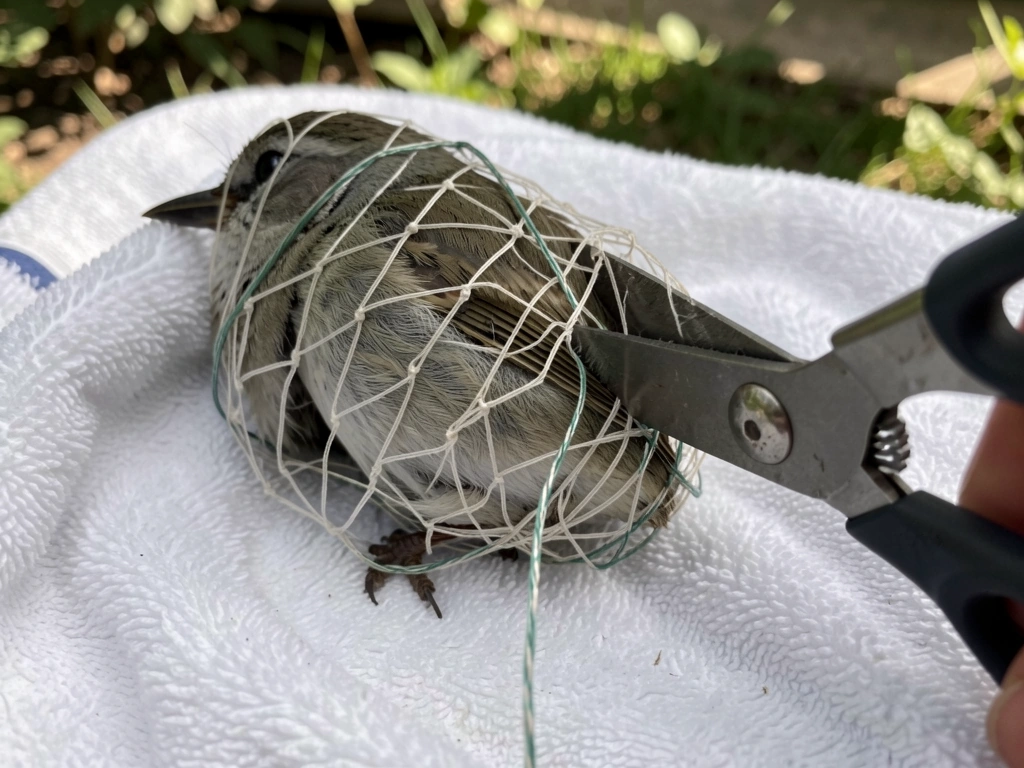
This is a situation where you need to think carefully before acting. Birds entangled in garden netting or fishing line can injure themselves severely by struggling, so the faster you act, the better. If the bird is in a small area of netting, cut the netting around it rather than trying to disentangle it while it's still attached, then take the bird (still loosely wrapped in netting if needed) to a vet or wildlife rescue as quickly as possible for full removal. For owls specifically, the Barn Owl Trust advises that disentanglement can be extremely difficult, and you should cut the netting and pass the bird immediately to an experienced vet or rehabilitator. Do not spend a long time pulling at string or net, as you risk cutting off circulation to the wing or leg. For fishing line, the same applies: do not yank or cut blindly near the bird's body. Get it to a professional.
Actively bleeding
If the bird is bleeding, apply very gentle pressure with a clean cloth. Don't press hard. Birds have very little blood volume and can go into shock quickly. Get the bird to a vet immediately. Bleeding injuries should not wait for a rescue centre to open tomorrow morning.
Found on the ground, possibly orphaned
Before assuming a young bird is orphaned, check its stage of development. A fledgling with most of its feathers, able to hop and flutter, is supposed to be on the ground. Its parents are almost certainly nearby and will continue to feed it. Picking it up is the wrong call unless it is in immediate danger from cats, traffic, or other hazards. If it's in danger, move it to a nearby bush or low branch and watch from a distance. If a bird is a nestling (naked or very sparse feathers, unable to stand), it has fallen from its nest. If you can find and safely reach the nest, you can replace it. The parents will not reject it because you touched it. If there's no nest or you can't reach it, contact a rescue. The RSPCA recommends monitoring for adult return before escalating, but if no adult appears within a reasonable time or the chick is in danger, get it to a rescue or vet.
When to call a wildlife rescue straight away vs when to watch and wait
The honest answer is: when in doubt, call. A quick phone call to a wildlife rescue or the RSPCA costs nothing and could save the bird's life. But here's a practical guide to help you make that call faster.
| Situation | What to do |
|---|---|
| Cat attack, even with no visible wounds | Contact rescue or vet immediately, same day |
| Hit by car | Contact rescue or vet immediately |
| Actively bleeding | Emergency vet now |
| Entangled in netting or fishing line | Cut netting, then immediate rescue/vet |
| Window strike, bird stunned but upright | Box it, monitor for up to 2 hours, call if no improvement |
| Fledgling on ground, fully feathered | Leave it, monitor from distance, call only if in danger |
| Nestling (naked/nearly naked) on ground | Contact rescue or vet |
| Bird breathing rapidly for 2+ hours | Contact rescue or vet |
| Bird unable to stand or hold head up | Contact rescue or vet immediately |
| Dead or visibly diseased bird (no injury) | Do not handle; report to APHA if suspected disease |
Help Wildlife, one of the most useful UK resources for this, emphasises that getting a bird to a wildlife rescue promptly (ideally within a few hours) is essential. What you do and don't do while seeking help can be life or death. That's not an exaggeration. The box-and-warmth stage buys you time. It does not replace professional care.
Who to contact and how to find help in the UK
There are several routes to getting the right help, depending on where you are and what time it is.
Your first port of call
- Help Wildlife (helpwildlife.co.uk): Search your postcode on their directory to find the nearest licensed wildlife rescue or rehabilitator in your area. This is the most practical starting point for most people in England, Wales, and Scotland.
- RSPCA (England and Wales): Call 0300 1234 999. They have a 24-hour advice and cruelty line and can advise on collection or direct you to a local rescue.
- Scottish SPCA (Scotland): Call 03000 999 999.
- USPCA (Northern Ireland): Call 028 3025 1000.
- Your local vet: Any vet in the UK is legally obliged to provide emergency first aid to a wild animal brought in, free of charge. If it's late and rescue centres are closed, a vet is a perfectly valid first step.
What to tell them
When you call, have the following ready. It saves time and gets the bird better help faster.
- Your location (postcode or nearest landmark)
- What type of bird it is, or a description if you don't know
- Where you found it (garden, roadside, near water, etc.)
- What you think happened (cat attack, window strike, found on ground, etc.)
- What it's doing right now: conscious, breathing, can it stand, is it bleeding
- Whether you've already contained it
If you have a bird of prey
Injured birds of prey (owls, hawks, falcons, kestrels) need specialist care. The Barn Owl Trust's advice is to contact a bird-experienced vet or a licensed bird rehabilitator that day, or first thing the next morning if found in the evening. Do not attempt to handle an owl or raptor without covering it fully with a thick towel first, as their talons can cause serious injury. For more detailed guidance on birds of prey specifically, it's worth looking into advice tailored to injured birds of prey, as the handling and triage considerations differ from small garden birds.
Getting the bird ready for transport or handover
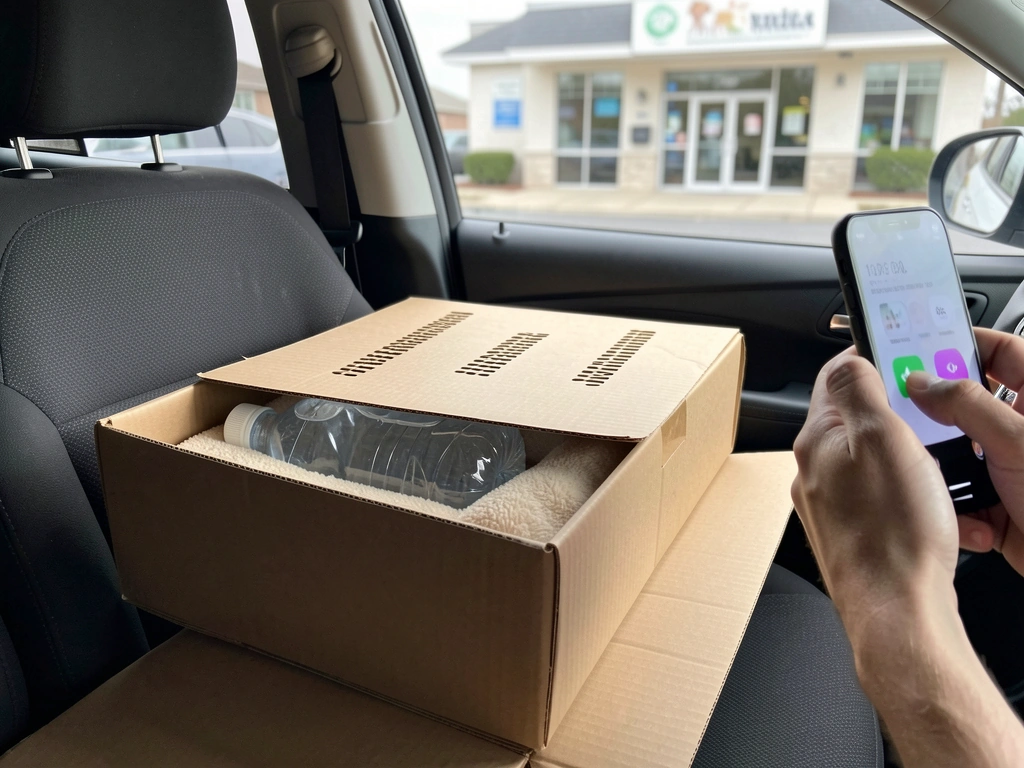
If you're taking the bird to a vet or rescue yourself, the transport container matters. Here's exactly what to prepare.
- Use a cardboard box (not a glass tank or plastic tub without ventilation). Punch air holes in the sides, not just the top.
- Line the base with a soft cloth, paper towels, or newspaper. Avoid anything loose and stringy that could tangle a foot.
- Add a wrapped warm water bottle at one end. The bird must be able to move away from it.
- Close and secure the lid. Darkness keeps the bird calmer during transit.
- Place the box on the car seat (not the boot if it's cold) or hold it steady on a passenger's lap. Avoid loud music or sudden movements.
- Do not open the box repeatedly to check on the bird. Every time you open it, you cause stress.
- Call ahead to the vet or rescue so they're ready when you arrive.
If a rescue is coming to collect the bird from you, keep it in the box in the same conditions and keep pets and people away from it until collection. The Wildlife Trusts recommend calling local vets beforehand to check whether they have links with wildlife rescue groups, as this can streamline the onward handover and get the bird to the right specialist faster.
UK law and why you can't just keep it
You might feel attached to a bird you've rescued, especially if you've had it in a box for a few hours. But in the UK, keeping a wild bird is not a grey area. Under the Wildlife and Countryside Act 1981 (which covers England and Wales, with equivalent legislation in Scotland and Northern Ireland), wild birds are legally protected. Keeping a wild bird without a licence is an offence, even if your intention is to help it recover.
This isn't just bureaucracy. Wild birds that are rehabilitated at home without specialist knowledge frequently end up imprinted (thinking they're human), malnourished, or injured further. They also often cannot be released successfully. Licensed wildlife rehabilitators have the training, facilities, and in some cases specific licences to care for protected species, which is why getting the bird to one of them gives it a genuinely better chance of survival and release.
The welfare-first rule applies here too. If a bird is suffering and cannot be treated, a vet can make the decision to euthanise humanely. That is not something a finder should try to do themselves, and it is not covered under any general exemption. Your legal and moral responsibility as a finder is to get the bird to someone qualified to make that assessment.
After you've handed it over: what to do next
Once the bird is with a rescue or vet, there are a few practical follow-up steps worth doing.
Clean up where you found it
If the bird was injured in your garden, check for and remove the hazard that caused the problem. Was it garden netting? The RSPCA notes that damaged netting can trap and kill birds repeatedly. Consider replacing it with wildlife-friendly alternatives (fine mesh, properly tensioned, regularly checked). Was it a window strike? Window alert stickers or external films on the glass can reduce future strikes significantly. Was it a cat? That's trickier, but encouraging cats to wear a bell collar can help.
Wash up properly
Wash your hands thoroughly with soap and water after handling the bird, the box, or any materials it was in contact with. Clean the box before reusing it for anything else. If you used a towel, wash it separately at a high temperature.
If the bird was found dead or died before help arrived
Do not handle a dead wild bird with bare hands. If you suspect disease (multiple dead birds in an area, unusual behaviour before death), report it to the APHA's dead bird surveillance scheme at 03459 33 55 77. For a single bird that died from an obvious cause (window strike, cat), you can double-bag it in plastic gloves and dispose of it in your household waste. Wash your hands thoroughly afterwards.
Following up with the rescue
Most wildlife rescues are run by volunteers with very limited time, so don't be offended if they can't give you detailed updates. Many do welcome a follow-up call or email, though, and some will tell you if the bird was successfully released. It's worth asking when you drop it off whether and how they communicate outcomes to finders. If you want to do more, consider making a small donation to the rescue that helped. They run on almost nothing and every bit helps.
Finding an bird is injured what should i do is stressful, especially if you've never done it before. But the steps are simple: observe first, contain safely, keep it warm and dark, don't feed it, and get it to a professional as fast as you can. You don't need to know what species it is or exactly what's wrong with it. The rescue will handle that. Your job is just to get it there in one piece.
FAQ
What’s the safest box to use when I’m waiting for a rescue or vet?
Use a shoebox or sturdy cardboard container with ventilation holes, then make it safer by adding soft paper or a towel to stop it sliding. Avoid anything fluffy that can catch claws, and don’t put food or water inside since birds can choke or spill liquid and worsen stress.
Can I give an injured bird water or food to help it until the rescue arrives?
You usually should not give water by mouth, and you should not offer food. Even if it seems calm, many injured birds cannot swallow safely and can aspirate. Keep the bird warm and dark, then call for help.
How long should I wait after a window strike before I escalate to a professional?
If it’s a window strike and the bird is able to sit up and breathe normally, you can monitor it in the dark, ventilated box for up to about two hours. If you see no improvement by then, or it has rapid breathing, bleeding, or still cannot fly, contact a wildlife rescue or vet the same day.
What should I do if the injured bird is bleeding, can I disinfect the wound?
If the bird is bleeding, apply very light pressure with clean cloth for short periods, do not wrap tightly, and do not use antiseptic or powders. Then get it to a vet or rescue urgently because bleeding can lead to shock quickly.
How can I tell whether a baby bird I found is truly orphaned and needs to be taken in?
Fledglings are often meant to be on the ground, so checking for hazards first matters. If it is in immediate danger, move it to a nearby safe spot (bush or low branch) and watch from a distance. Unless it is clearly a nestling or in danger, avoid picking it up.
What should I do if the bird is dead or looks sick but I cannot see any injuries?
If the bird is dead or visibly severely ill with no obvious injury, do not handle it with bare hands. For multiple dead birds, or unusual illness in an area, report it to the relevant dead bird surveillance process rather than trying to move or examine it yourself.
Is it okay to keep an injured bird overnight if I can’t get help immediately?
Do not keep the bird overnight at home. Keep it contained only while you are arranging professional care, ideally within a few hours. If you cannot reach help quickly, call again for an alternative route (local vet, emergency number, or another rescue) rather than delaying.
How should I manage my home environment while the bird is in the box?
Pets and people should be kept away, but you can still open the room door and allow fresh air to circulate. Don’t put the box in direct sunlight, don’t use fans blowing directly into the container, and avoid loud noise or constant checking.
Can I handle the bird more if it looks like I can help quickly, for example by removing string or net?
Yes, but only within your immediate triage. For example, you can cover a raptor with a thick towel before any handling, and only move entangled birds enough to prevent circulation loss. Don’t attempt full removal or prolonged disentanglement yourself.
What if the injured bird is dirty or covered in something like oil or chemicals?
If the bird is covered in oil or heavily soiled, do not try to wash it yourself. Many birds cannot regulate temperature properly and oils can be toxic if ingested. Contain it and contact a wildlife rescue, since specialized cleaning equipment and trained handling are needed.
If a cat touched a bird but there’s no visible bleeding, should I still treat it as an emergency?
When cats are involved, treat it as urgent even if there are no obvious wounds, because internal infection can develop quickly. Isolate the bird in a dark, warm container and contact a vet or wildlife rescue right away the same day.
What if the bird is in a dangerous spot like a road, should I move it before calling?
If you’re unsure whether it’s safe to move the bird, look for immediate risks first, like traffic, cats, or exposure to rain. Move it only a short distance to safety near where you found it, then call for advice. When the danger is ongoing, prioritize getting it out of harm’s way.
What hygiene steps should I take after I transport the bird or it leaves my home?
After pickup or dropping off, wash hands thoroughly with soap and water and clean anything the bird or box contacted. If you used towels, wash them separately on a hot cycle. Avoid sharing those items with other people or pets before laundering.
What details should I collect before I call a wildlife rescue or vet in the UK?
Have ready: exact location (postcode or nearest road), when you found the bird, what you observed (bleeding, abnormal posture, whether it can breathe normally), whether a cat or window was involved, and a clear description of size and estimated age (fledgling vs nestling). This helps triage and speeds up instructions.
When I drop the bird off, should I expect updates, and how do I ask for them?
For communication, ask the rescue what they can share, for example whether they will confirm acceptance and whether they provide release updates. Many are volunteer-run, so outcome details may be limited, but asking at the handover usually gets the best available answer.
Next Article
Wounded Bird What to Do Step by Step for First Help
Step-by-step wounded bird first aid: safety, quick assessment, proper containment, what not to do, and who to call.