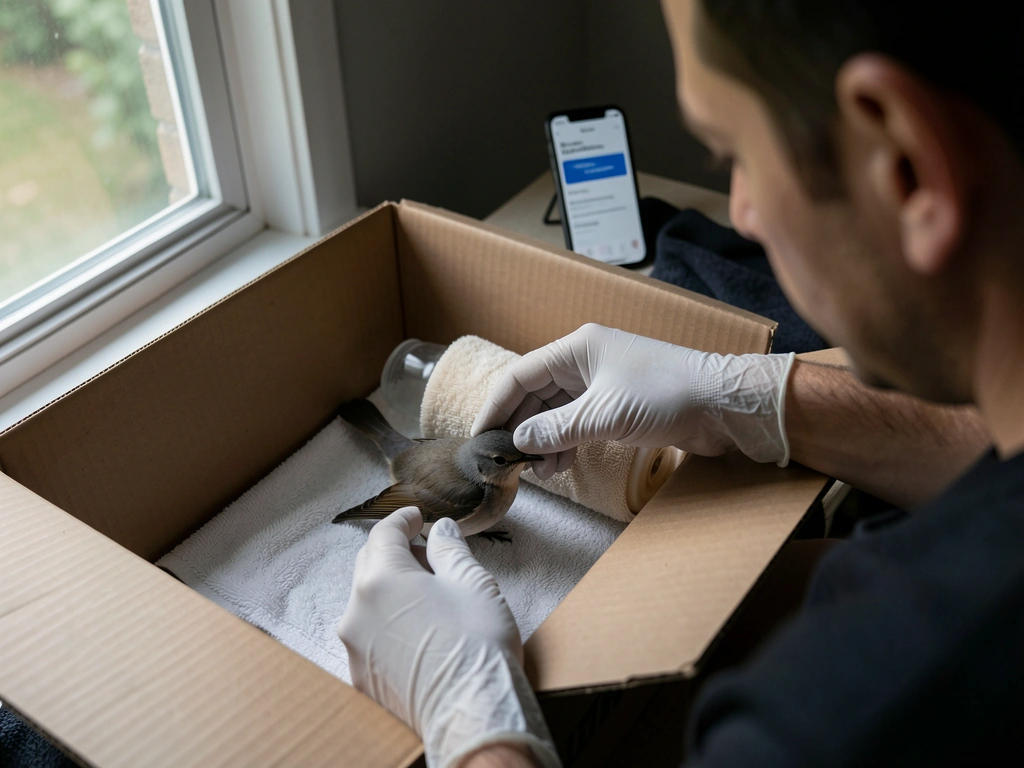
If you've found an injured bird right now, here's the short version: don't panic, don't try to feed it, don't attempt any repairs, and do get it into a quiet, dark box as quickly and calmly as you can. Then call a wildlife rehabilitator or vet. That sequence, done in order, gives the bird the best possible chance. Everything below walks you through each step in detail.
Bird is Injured: What to Do Right Now and Next Steps
Marcus Chen
23 Mar 2026
First steps: keep yourself and the bird safe
Before you touch anything, pause for a few seconds. I know that feels counterintuitive when an animal is suffering, but rushing in can hurt you and stress the bird further. Your first job is to make sure the situation is actually safe to approach. Is the bird near traffic? Is there a cat or dog still close by? Is it a large bird of prey with talons that could seriously injure you? These things matter.
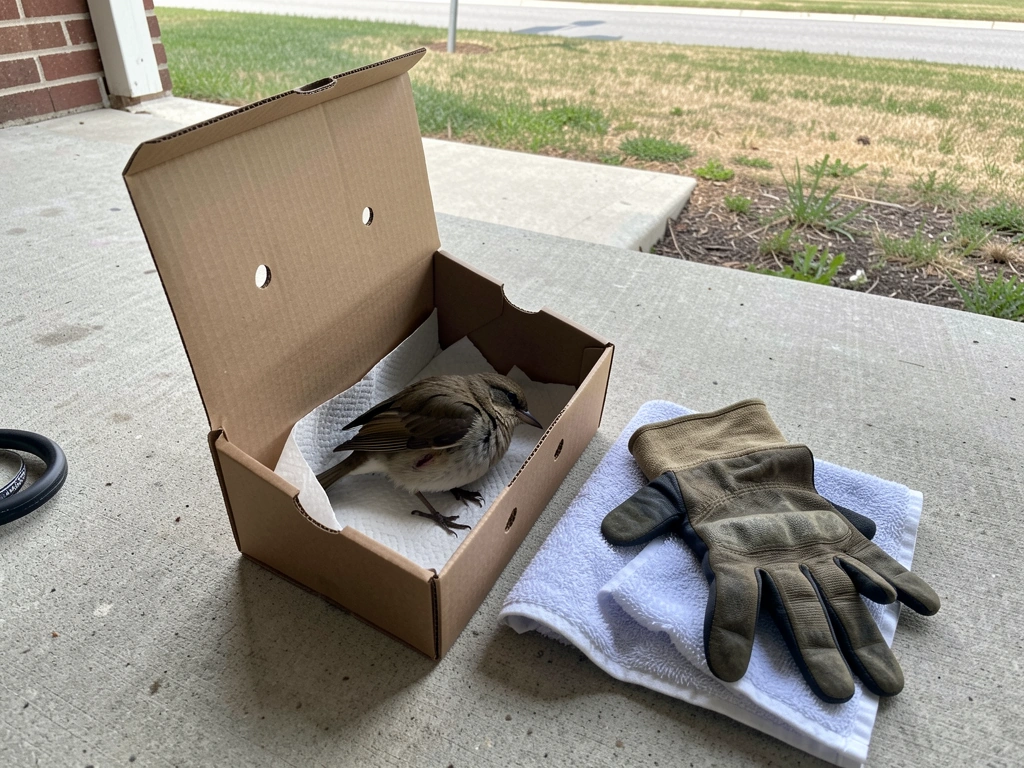
Wild birds carry bacteria and parasites that can transfer to humans, particularly through bites, scratches, and droppings. This doesn't mean you can't help, it just means you need a barrier between you and the bird before you make contact. Grab a pair of thick work gloves if you have them. A folded towel works too. If you have neither, use a jacket or a plastic bag over your hands. Never handle a bird bare-handed, especially if it's a raptor like a hawk or owl, as their talons can puncture skin easily even when the bird is injured and disoriented.
Keep children and pets away from the area immediately. Pets are a major cause of bird injuries in the first place, and an excited dog or cat can finish what they started. Even a curious child leaning in can cause a stressed bird to thrash and injure itself further.
Quick assessment: signs of shock, bleeding, and likely causes
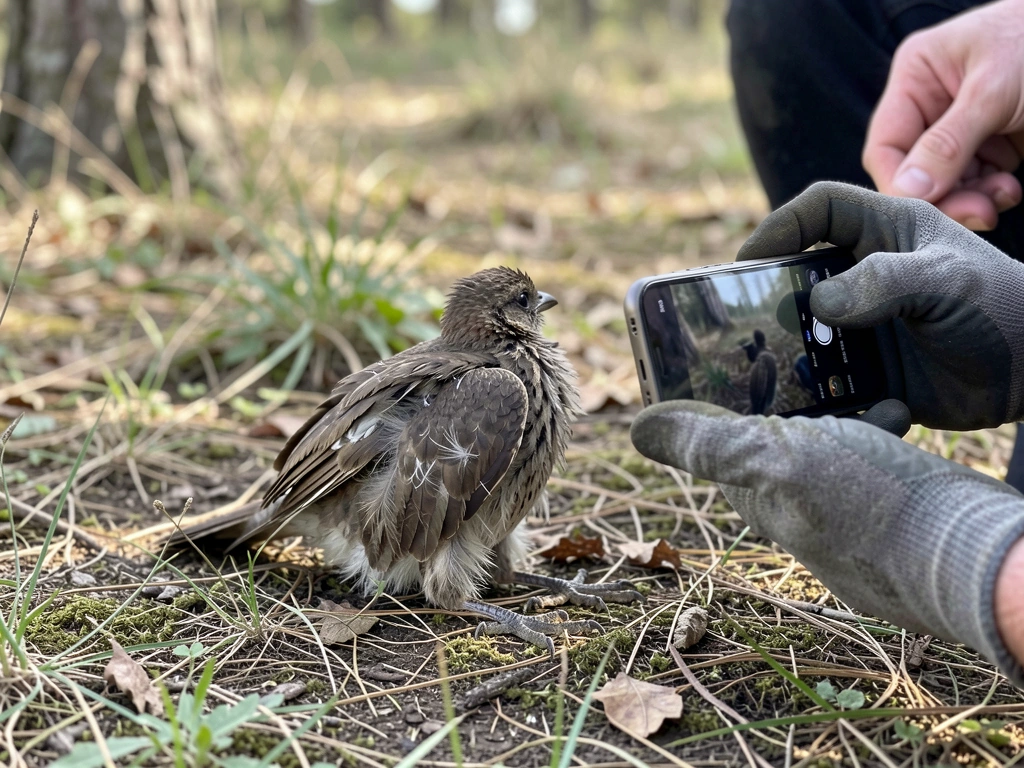
You don't need a veterinary degree to do a quick visual check. You're not diagnosing, you're just gathering information that will help the wildlife rehabilitator or vet when you call. Look at the bird from a short distance before you move it.
The most common reasons a bird ends up grounded and injured include window strikes, cat or dog attacks, vehicle strikes, and entanglement in netting or fishing line. A window-strike bird will often be sitting upright but dazed, with no obvious wounds. A cat-attack bird may look fine externally but have puncture wounds hidden under feathers, and those wounds almost always cause fatal infection within 24 to 48 hours without treatment. This distinction matters because cat-attack birds need a vet immediately, even if they look okay.
Signs of shock to look for: the bird is fluffed up, eyes are partially closed, it's breathing with its beak open, it's not trying to escape when you approach, or it's tilting or falling to one side. A bird in shock needs warmth and quiet above everything else. Signs that warrant faster escalation to emergency care include visible bleeding, a wing hanging at a strange angle, the bird on its back and unable to right itself, or obvious eye damage.
Also take a quick note of whether it's an adult or a juvenile. If the bird is very small with fluffy down mixed into its feathers and has a short tail, it may be a fledgling that's learning to fly rather than an injured adult. Fledglings are often found on the ground and look helpless, but their parents are usually nearby and watching. If you're unsure, take a photo and call a wildlife rehabilitator before intervening. The RSPCA recommends exactly this approach: photograph first, call for advice, then decide whether to pick it up.
How to contain and handle without causing more harm
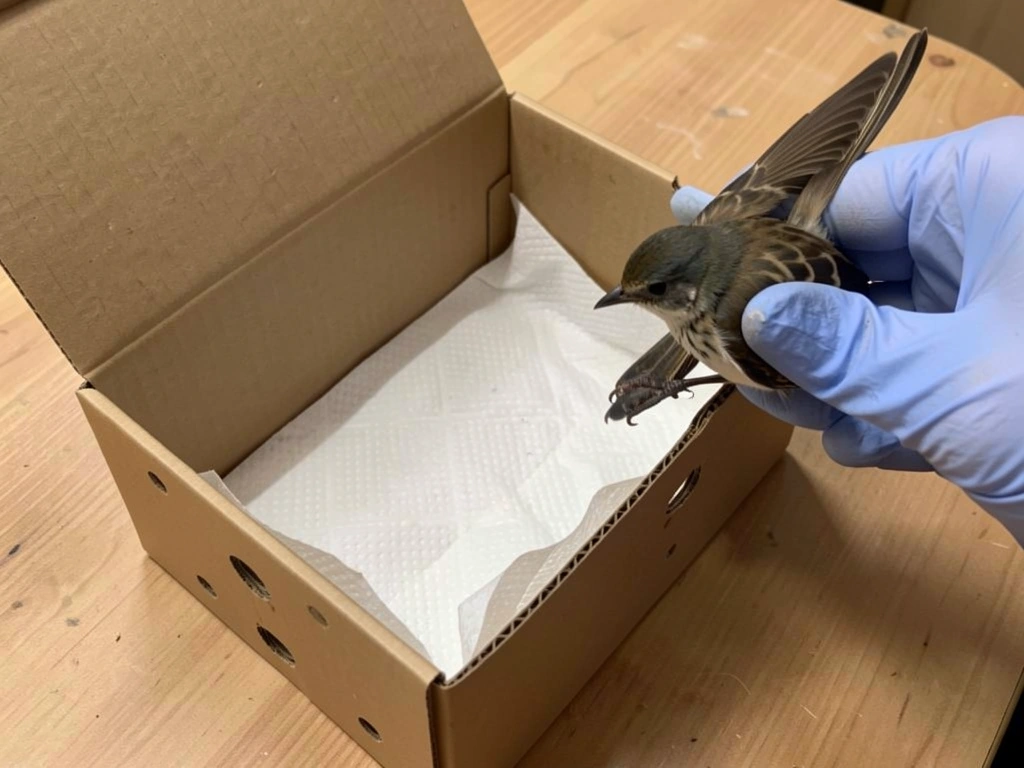
A cardboard box is your best friend here. It doesn't need to be special. Any box that's large enough for the bird to sit comfortably, with a lid you can close, will work. Poke a dozen or so small holes in the sides for ventilation before you use it. Line the bottom with a thin layer of paper towel or a small cloth so the bird has something to grip.
To pick up the bird, use your gloved hands or drape a towel over it gently. Approach slowly and from the side rather than from directly above, as birds are wired to react to overhead movement as a predator threat. Cup both hands around the bird's body, keeping its wings held gently against its sides. Don't squeeze, but don't be so loose that it can flap and re-injure itself. Lower it into the box and close the lid immediately. Tufts Wildlife Clinic specifically recommends closing the box right away to reduce escape attempts and additional stress.
Once the bird is in the box, place it in a quiet, dark room indoors, away from noise, pets, and children. Dark and quiet reduces stress dramatically, which is critical for a bird in shock. Best Friends Animal Society advises keeping the box in a dark, quiet area indoors as one of the single most important things you can do while you wait for professional help.
Don't keep checking on it. I know it's tempting, but every time you open the box, you're spiking the bird's stress hormones. Set it down somewhere safe, close the lid, and leave it alone while you make your calls.
What to do (and not do) for basic first aid
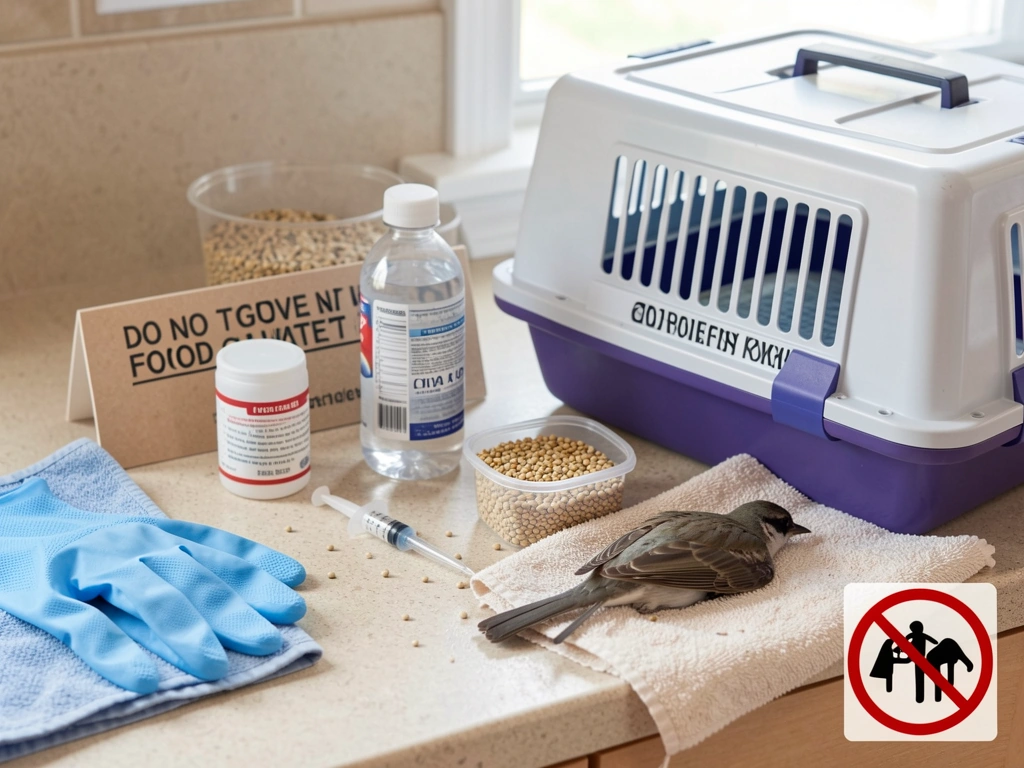
Here's where a lot of well-meaning people accidentally cause harm. Most of what you might instinctively want to do for an injured bird is actually the wrong move. Let's go through it clearly.
Do not give food or water
This is the most important rule. Do not attempt to feed the bird or drip water into its beak. A bird in shock or with internal injuries can aspirate liquid into its lungs in seconds. Even a seemingly healthy bird can be harmed by the wrong food offered the wrong way. Both the U.S. Fish and Wildlife Service and Best Friends Animal Society are clear on this: no food or water unless a licensed wildlife rehabilitator specifically tells you otherwise.
Do not try to splint or wrap injuries yourself
A broken wing is not a DIY repair. Bird bones are extremely delicate and hollow, and wrapping them incorrectly can cut off circulation or make a clean fracture into a compound one. Leave it alone. The bird will manage much better resting quietly in a box than it will after an amateur splinting attempt.
If there is visible bleeding
If the bird is actively bleeding and you can see the wound clearly, you can apply very gentle pressure with a clean piece of gauze or cloth for a minute or two. Don't press hard, birds are fragile. Don't apply any antiseptic, hydrogen peroxide, or ointments of any kind. These products damage tissue and do more harm than good on bird wounds. If the bleeding is severe or you can't control it quickly, that's an immediate escalation situation and you need emergency vet help without delay.
Warmth, but don't overdo it
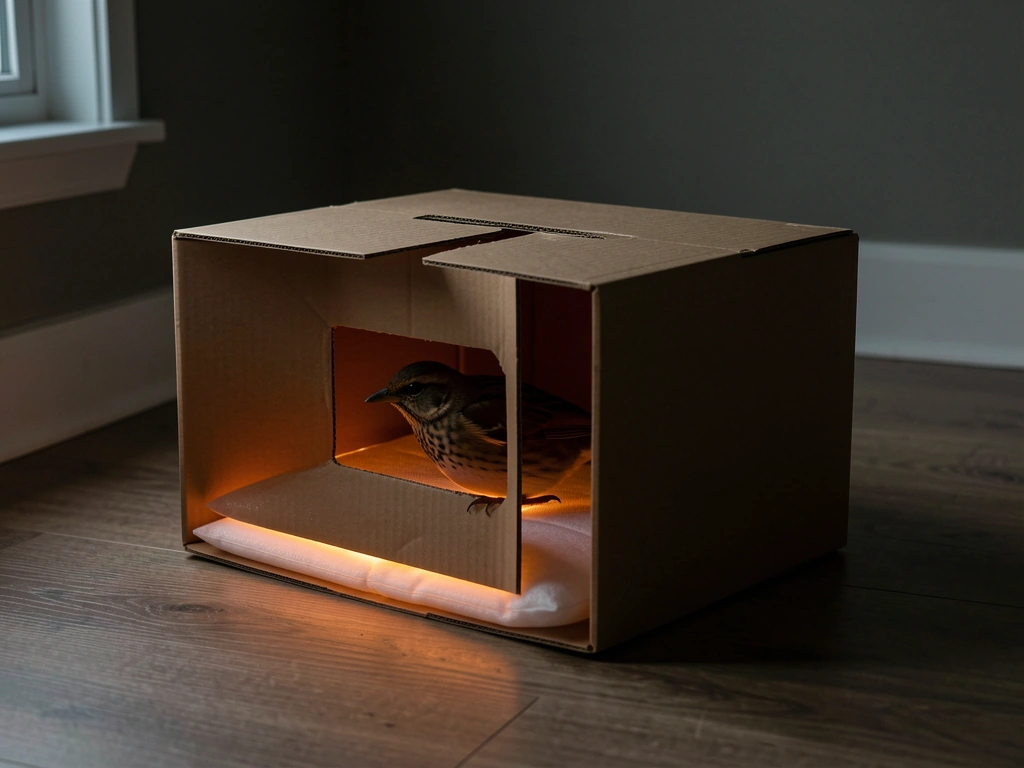
If the bird appears cold and is in shock, you can place a heating pad on its lowest setting under one half of the box, not the whole bottom, so the bird can move away from the heat if it gets too warm. A small hand warmer wrapped in a cloth works too. Overheating is just as dangerous as being cold, so never cover the box completely or place it in direct sun.
When and who to contact for wildlife help
Once the bird is contained, your next step is to find professional help. Do this while the bird is resting in the box. You don't need to wait to see how things go, make the call right away.
P|P|P|P|P|Your best first contact is a licensed wildlife rehabilitator. These are people specifically trained to care for wild birds and animals, and in most countries, they're the only ones legally permitted to hold and treat wild birds. In the US, you can search the National Wildlife Rehabilitators Association directory or call your state's fish and wildlife agency. In the UK, the RSPCA helpline (0300 1234 999) can connect you with local help. In Australia, WIRES (1300 094 737) is the go-to number. If you're looking for options specific to your location, searching for ' injured bird what to do near me' or local wildlife rescue numbers is a good starting point.
If you can't reach a wildlife rehabilitator quickly, call a local veterinary clinic. Many vets will assess an injured wild bird at no charge, or at least stabilize it until a rehabilitator can take over. Animal control is another option if you're in the US, though their capacity to handle wild birds varies significantly by area.
When you call, have the following information ready:
- What type of bird it is (or your best guess, and a description if you're unsure)
- Where you found it (a general location is fine)
- What you think happened, for example: window strike, cat attack, found on the road
- What symptoms you can see: bleeding, drooping wing, unable to stand, dazed
- Whether you've already contained it and where it is now
The more specific you can be, the faster they can advise you. Don't guess about the injury if you're unsure, just describe what you observed.
When to escalate immediately
Some situations skip the 'wait and call' step entirely. If the bird was caught by a cat or dog, even briefly, treat it as an emergency and get to a vet as fast as possible. Cat saliva carries Pasteurella bacteria, which is fatal to birds within 24 to 48 hours without antibiotic treatment. This is not something that resolves on its own. Similarly, if the bird is convulsing, bleeding heavily, or completely unresponsive, that's an emergency situation requiring immediate veterinary care.
How to transport the injured bird and what to monitor
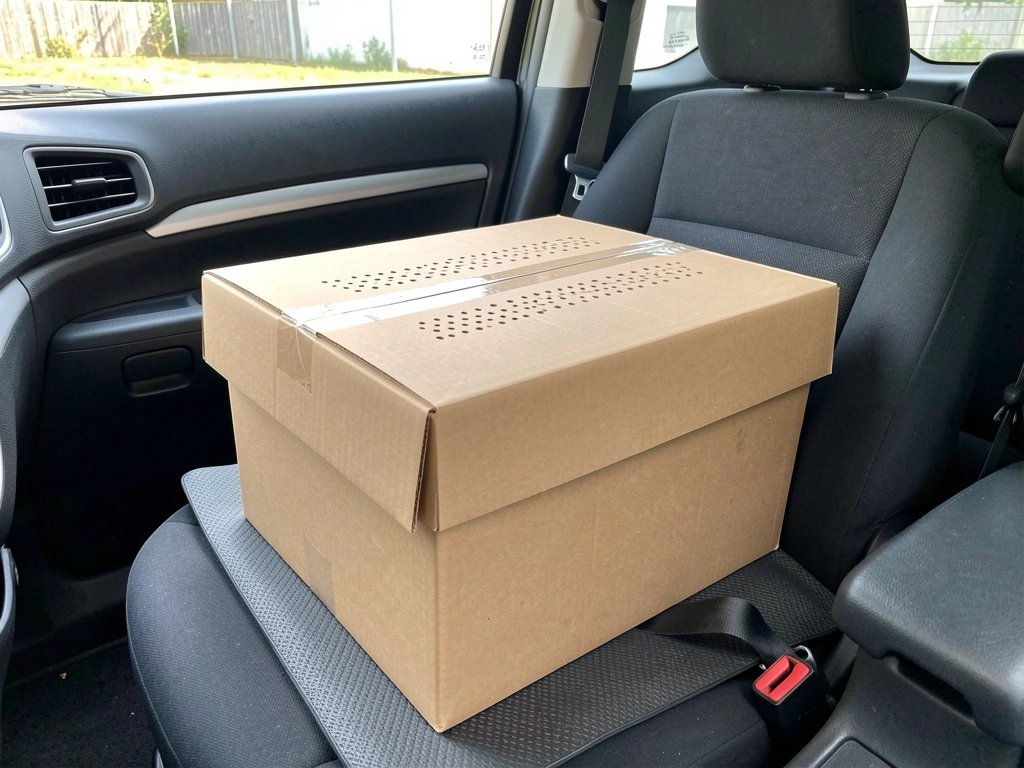
When it's time to transport the bird to a vet or rehabilitator, keep the box closed and secure. Place it on the seat or floor of your car where it won't slide around. Don't put it in the boot (trunk) if it's enclosed and hot.
Best Friends Animal Society specifically advises keeping the box out of direct sunlight and away from air conditioning vents during the drive. Temperature extremes in either direction cause additional stress and can push a bird already in shock into organ failure. A moderate, stable temperature is the goal.
Don't open the box to check on the bird during transit. Don't play music loudly. Try to drive smoothly and avoid sharp stops. The less stimulation the bird experiences, the better.
If you're waiting for someone to come to you rather than driving yourself, here's what to watch for through small holes in the box without opening it: changes in breathing rate, sounds of distress, or silence when there was previously movement. If the bird goes completely still and silent for a long period, it may be deteriorating and you should contact your wildlife rehabilitator or vet to let them know.
One thing worth saying plainly: even with everything done right, not all injured wild birds survive. That's a hard truth, but it's not a reason to not try. Getting a bird into a quiet, dark box and connecting it with professional help within an hour of finding it dramatically improves its odds. What you do in those first minutes genuinely matters.
A quick reference for the whole process
| Step | What to do | What NOT to do |
|---|---|---|
| Approach safely | Use gloves or a towel; keep pets and kids away | Touch bare-handed or rush in without assessing the situation |
| Assess the bird | Note species, visible injuries, likely cause; photograph if unsure | Assume it's fine or that it just needs rest outside |
| Contain the bird | Place in a ventilated cardboard box with a lid; line the base with a cloth | Use a wire cage, mesh container, or keep the box open |
| Where to keep it | Quiet, dark room indoors; away from noise and pets | Near a TV, in the garage with fumes, or in direct sunlight |
| First aid | Gentle pressure on active bleeding; warmth under one side of box only | Feed, give water, splint wings, apply antiseptic |
| Call for help | Wildlife rehabilitator, local vet, or animal control; call immediately | Wait to see if it gets better on its own |
| Transport | Box closed, stable temperature, no direct sun or AC vents | Open box during the drive or play loud music |
FAQ
My bird seems alert and not bleeding, should I still call a rehabber right away?
Do not try to “test” the bird or offer food, even if it seems alert. Instead, keep it contained in a quiet, dark box and call a wildlife rehabilitator or vet, especially if it is sitting low, wobbling, or not flying normally. If you are dealing with a cat or dog situation, treat it as urgent because hidden internal infection can progress quickly even when there is no visible wound.
How can I tell if it is truly injured or just a fledgling that fell out of the nest?
If you find a small bird that might be a fledgling, watch from a distance for parents returning to feed. If it is fully feathered, hopping around, and can stand, it may be safer to leave it where it is or move it only a short distance to a safer spot (out of traffic). If it is wet, cold, severely underdeveloped, or you cannot confirm a parent nearby within a reasonable time, photograph and call for guidance before picking it up.
What is the safest container to use, and what should I avoid?
Use a box you can close, never a ventilated cage, bucket, or open container that lets it escape. Add ventilation holes in the sides, line the bottom with paper towel or a small cloth for grip, and keep the box dark and quiet. Avoid covering the entire box, since overheating risk is real, and do not put the bird near vents, heaters, or direct sun.
What should I do if the bird is tangled in fishing line, netting, or string?
If the bird is caught in netting, line, or fishing material, do not pull hard or try to cut it while the bird is thrashing. Contain the bird first as best you can, then contact a wildlife rehabilitator for instructions. In the meantime, reduce movement (keep it in a box, lid closed) and keep people and pets away. If the line is tight and causing constriction, that is an urgent situation for immediate help.
A bird hit a window, it looks stunned but not injured, when is it an emergency?
For window strikes, many birds look dazed rather than visibly injured. Keep them warm-ish and quiet in the dark box, minimize handling, and call a rehabilitator for advice if there is no improvement within a short period. If there is visible bleeding, seizures, repeated backward rolling, or inability to stay upright, treat it as an emergency and seek immediate vet care.
How should I handle bleeding, and should I use antiseptic or peroxide?
If you see blood, you can apply gentle pressure with clean gauze or cloth for a minute or two. Do not use antiseptics, hydrogen peroxide, or ointments, because they can worsen tissue damage. If bleeding is heavy, the wound is in a hard-to-control location, or you cannot slow it quickly, contact emergency vet help rather than waiting for a call-back from a rehabber.
What is the correct way to provide warmth without overheating the bird?
Do not use a microwave heating pad, hot water bottle, or direct flame, and never place the heat source over the whole bottom. Use a heating pad on the lowest setting under only one half of the box, so the bird can move away if it gets too warm. If the bird is overheating (excessly warm to the touch, very rapid distress), remove the heat and keep the box shaded.
Can I give the bird water or food to help it recover?
Do not give water by mouth and do not insert anything into the beak. A bird in shock can aspirate liquid and develop serious breathing complications quickly. The safest approach is containment, warmth if needed, and professional guidance. If a rehabilitator instructs you on a specific method, follow their instructions exactly, otherwise do not attempt DIY fluids.
My bird’s wing looks broken. Should I tape or splint it?
A DIY splint can worsen circulation or turn a fracture into a more severe injury. Keep the bird still in a box, hold wings gently against the body if you must pick it up, and let a rehabilitator or vet assess. If a wing is hanging at an odd angle, if the bird is unresponsive, or if there is visible bone or deep injury, seek urgent care.
What if I cannot reach a wildlife rehabilitator right away?
If you cannot reach a rehabilitator immediately, call a local veterinary clinic and ask about injured wildlife stabilization, then follow their direction on next steps. If it is a cat or dog bite, heavy bleeding, convulsing, or the bird is completely unresponsive, treat it as an emergency and seek immediate vet care rather than waiting for wildlife services.
How do I monitor the bird while it is in the box (especially during a wait or transport)?
Do not open the box to check. Instead, observe through small ventilation gaps or the box sides without disturbing the bird. If you notice changes in breathing, persistent distress sounds, or prolonged silence where there was movement, contact the rehabber or vet to update them. During transport, keep the lid closed and avoid temperature extremes.
What signs mean “do not wait” and I should escalate to emergency help?
If the bird is cold and in shock, warmth should be gentle and localized to one half of the box, then reassess. If it is actively bleeding, unresponsive, convulsing, or has major eye damage, treat it as urgent and move quickly to emergency care. When in doubt, tell the helper or vet what you observe (posture, breathing, responsiveness) so they can triage appropriately.
Next Article
Bird Hurt Wing: What to Do Right Now and Next Steps
Step-by-step bird hurt wing response: assess, stabilize, keep warm, control bleeding, transport safely, and know when to