If you've found a bird with a hurt wing, here's the short answer: contain it gently, keep it warm, dark, and quiet, and get it to a wildlife rehabilitator or vet as soon as possible. Do not try to fix the wing yourself, and do not give it food or water. That's the core of it. Everything below explains how to do each of those steps correctly so you don't accidentally make things worse.
Bird Hurt Wing: What to Do Right Now and Next Steps
Marcus Chen
23 Mar 2026
How to assess a bird with a hurt wing safely
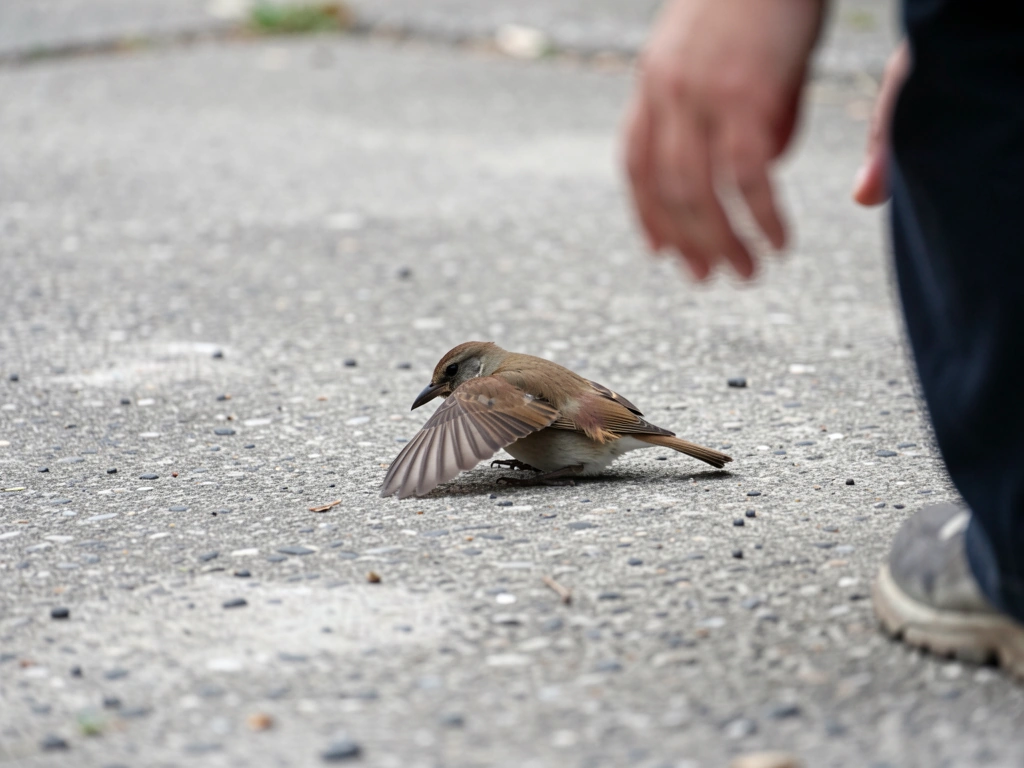
Before you do anything else, take 30 seconds to observe the bird from a few feet away without touching it. You're looking for two things: how bad is this, and is it safe to approach? A bird that lets you walk right up to it is already in serious trouble, because healthy wild birds don't do that.
Check for these signs from a distance first. A drooping or oddly angled wing that hangs lower than the other one usually means a fracture or dislocation. A wing that's extended and won't fold back against the body is another red flag. Look for visible bleeding, feathers matted with blood, or anything protruding that shouldn't be there.
Once you've looked, assess the urgency level. The Wildlife Center of Virginia flags these as emergency situations requiring immediate professional help: the bird is non-responsive, lying on its side, breathing with difficulty, bleeding heavily, or has a visibly broken limb or extensive wound. If you're seeing any of those, skip the rest of the assessment and move straight to containment and transport.
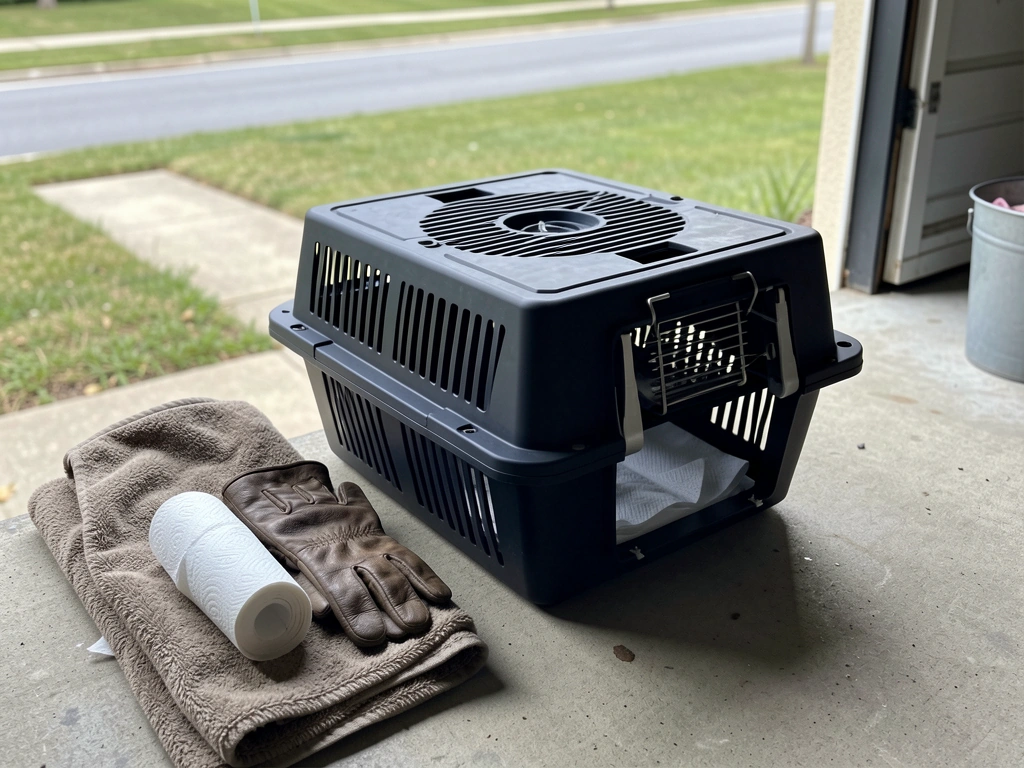
If the bird is alert and upright but clearly can't fly, that's still serious, but you have a little more time to act carefully. Before you touch it, put on gloves if you have them. Wild birds can carry bacteria, and raptors in particular have talons that can cause real injury. If gloves aren't available, use a folded towel or jacket to protect your hands.
What to do immediately at home (first aid steps)
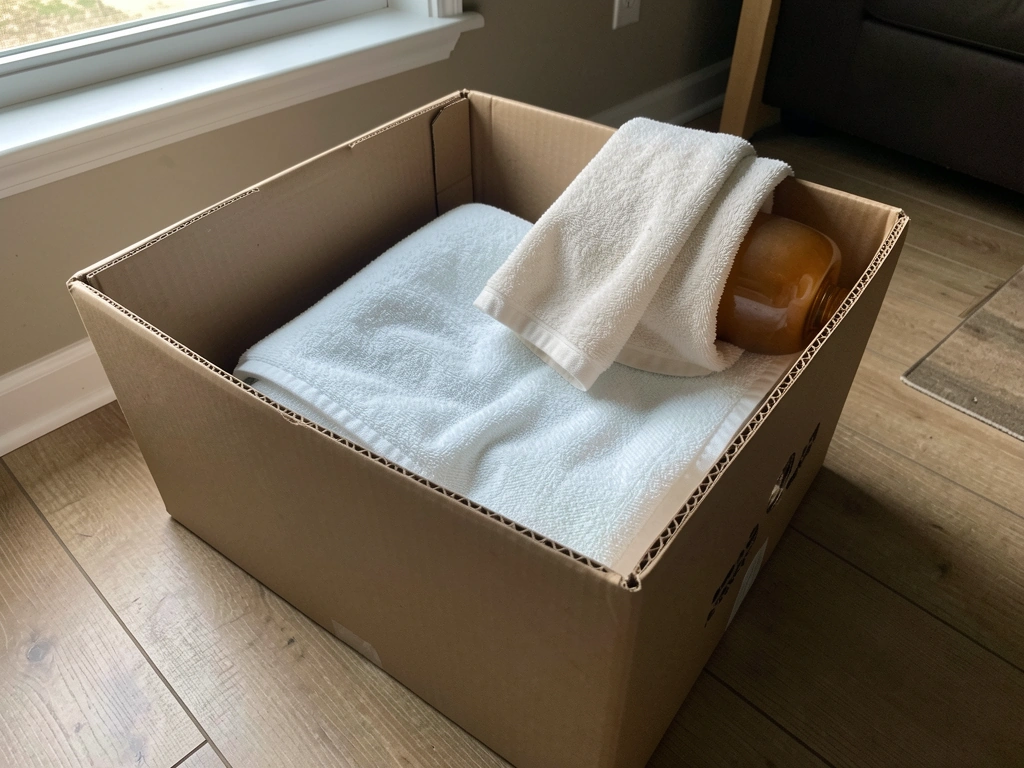
The goal of first aid here isn't to treat the injury. It's to stabilize the bird so it doesn't go into deeper shock, hurt itself further, or die from stress before you can get it to someone qualified to actually help. Keep that goal in mind for every step.
- Get a container ready before you pick the bird up. A cardboard box works well. It should be large enough that the bird isn't crammed in, with small air holes punched in the sides. A shoebox is fine for a sparrow; you'll need something bigger for a pigeon, crow, or hawk.
- Line the bottom with a non-slip surface like a folded towel or paper towels. Avoid smooth surfaces because the bird will struggle to stay upright and exhaust itself.
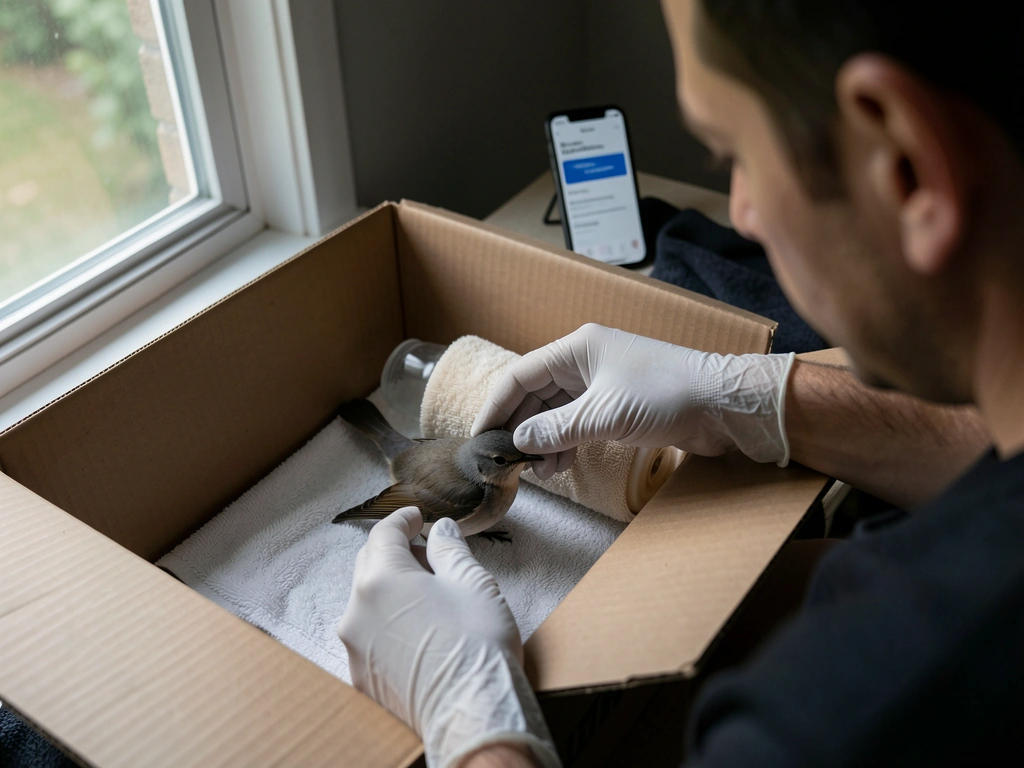
- Approach the bird slowly and calmly. Cover it gently with a light towel or cloth, then scoop it up from underneath with both hands, keeping the wings pressed lightly against its body. Don't squeeze. You're just preventing flapping, which burns energy and can worsen a fracture.
- Place the bird in the box and close it. If there is active bleeding from the wing and you can see a wound clearly, you can apply very gentle pressure with a clean cloth for a minute or two. Do not try to wrap or bandage the wing yourself.
- Add a heat source if possible. A hot water bottle or a sealed zip-lock bag filled with warm (not hot) water, wrapped in a towel, placed at one end of the box works well. This matters especially if the bird seems lethargic or in shock. The bird needs to be able to move away from the heat, which is why you only put it at one end.
- Put the box somewhere warm, quiet, and dark. A bathroom, a quiet room, or the inside of your car with the heat on low is fine. Keep children and pets away.
- Call a wildlife rehabilitator or vet right now. While the bird rests, you should be on the phone figuring out where it's going.
When to stop DIY and get a wildlife rehabber or vet
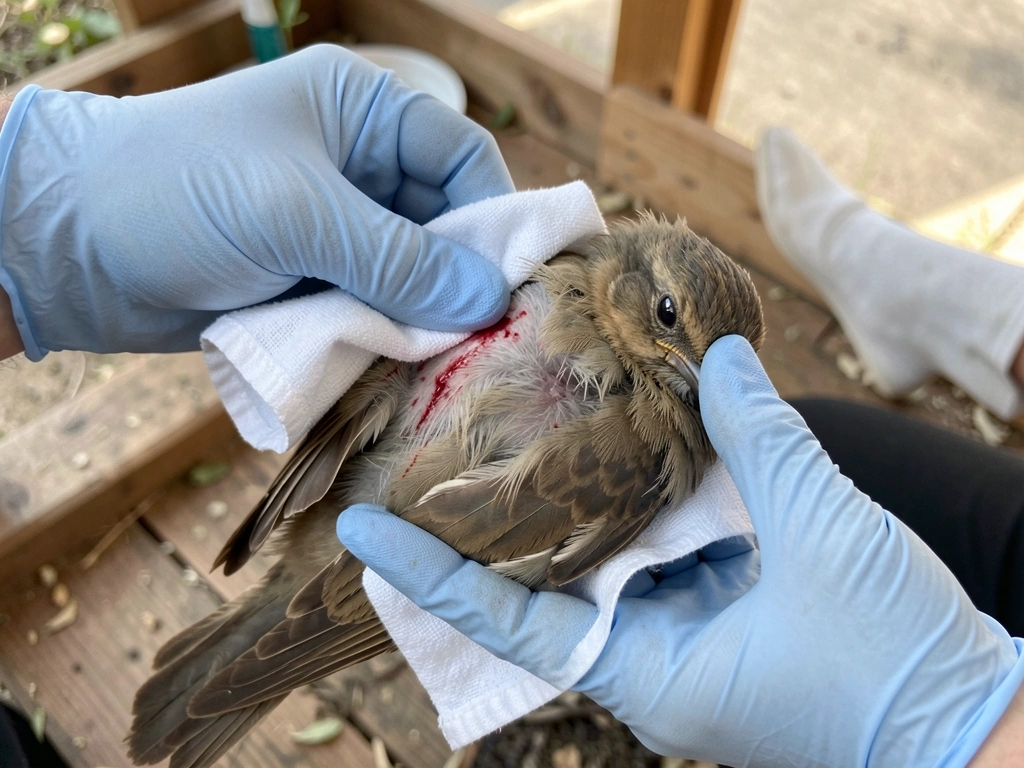
Honestly, the answer to this is almost always: immediately. A hurt wing is not something you can fix at home, and the longer a wild bird spends in an uncontrolled environment, the worse its odds get. But some situations are truly urgent and need to be treated as emergencies.
Get professional help right away if the bird has any of the following: heavy or ongoing bleeding, a bone visibly poking through the skin or feathers, the bird is non-responsive or barely reacting to touch, it's lying on its side, it's gasping or breathing with its beak open, or it was caught by a cat or dog. Cat bites especially look minor but introduce bacteria deep into tissue and are almost always fatal without antibiotic treatment within hours.
Even if the bird seems stable, wing injuries involving fractures, deep puncture wounds, severe swelling, or deformity need a wildlife rehabilitator or avian vet for diagnosis and treatment. You can't splint a bird's wing safely without training. Attempting it usually causes more harm than leaving the wing alone during transport.
To find help near you: search for a local wildlife rehabilitator through your state or country's wildlife agency, or call a local vet clinic and ask who they refer injured wildlife to. In the US, the Wildlife Center of Virginia and similar state-level resources maintain referral lists. In the UK, the RSPCA and local wildlife rescues are good first calls. In Australia, contact WIRES or your state's wildlife rescue network. Aim to get the bird to a professional within one to two hours of finding it if at all possible.
How to transport the bird without making the injury worse
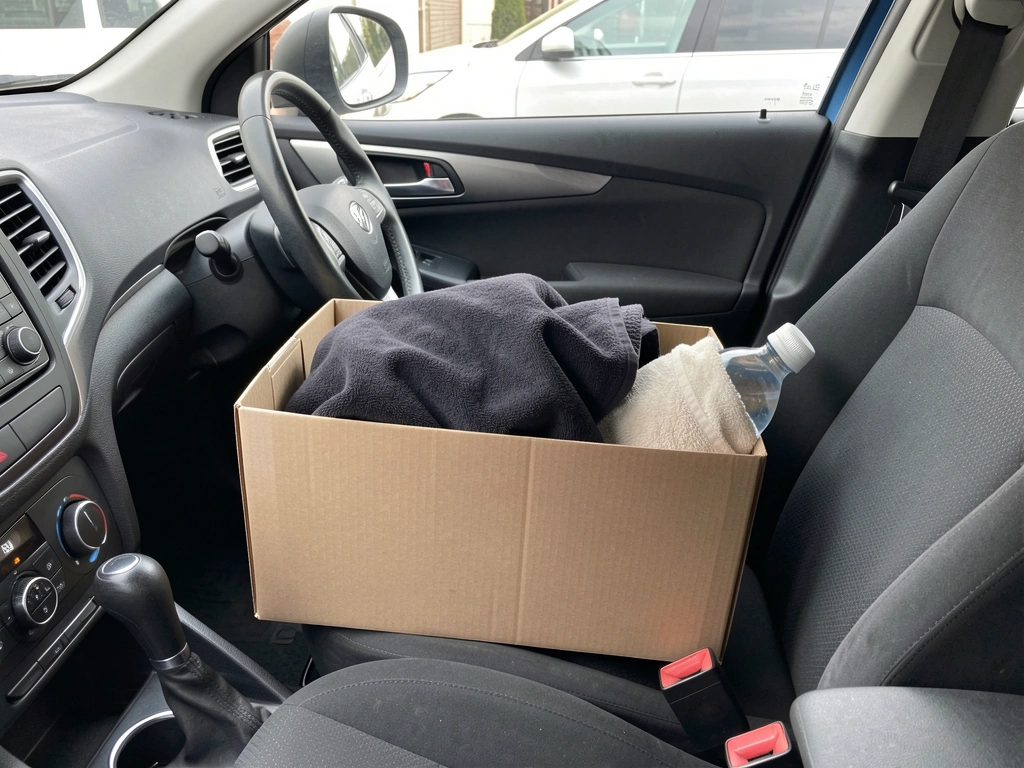
Transport is where a lot of well-meaning people accidentally cause more damage. The main rules are: one bird per container, keep it dark and quiet, drive smoothly, and don't open the box to check on it every few minutes.
Use a cardboard box or a hard-sided carrier with ventilation. The U.S. Fish and Wildlife Service is explicit that transport containers need to be secure, ventilated, and designed so the bird can't injure itself further or escape. Avoid wire cages for transport because injured birds can catch a wing in the bars and make things significantly worse.
Don't line the sides with anything the bird can grab and flap against. The less it moves during transport, the better. Keep the box on the seat next to you or on the floor, not in a hot trunk. In cold weather, pre-warm your car. In hot weather, keep the AC on but don't point vents directly at the box.
Talk as little as possible near the bird. Loud voices and sudden sounds are stressful. If you have someone else in the car, ask them to keep quiet too. Darkness genuinely calms birds, so resist the temptation to open the lid. A bird that goes quiet in the box is usually resting, not dying.
Common wing injuries and what the symptoms mean
You're not expected to diagnose the bird. That's the rehabber's job. But understanding roughly what you might be looking at helps you communicate clearly when you call for help and helps you know how urgent the situation is.
| Injury Type | What It Looks Like | Urgency Level |
|---|---|---|
| Fracture (broken bone) | Wing droops noticeably lower than the other; may look bent at an odd angle; bird cannot fold wing against body; possible swelling | High — needs professional care promptly |
| Sprain or soft tissue injury | Wing held slightly low or awkwardly but not dramatically bent; bird is alert and upright; may attempt to move wing | Moderate — still needs a rehabber, but slightly more stable |
| Dislocation | Wing extended outward and unable to fold back in; bird in clear distress; may look similar to fracture | High — requires professional assessment to distinguish from fracture |
| Puncture wound (cat/dog bite) | Small holes in skin, may not bleed much; feathers may be wet or matted in one spot; bird may seem okay at first | Very high — bacteria from bites are life-threatening without antibiotics |
| Laceration or open wound | Visible cut or tear in skin or muscle; may be bleeding; feathers missing around wound | High — bleeding needs controlling; infection risk is serious |
| Wing tip injury (collision) | Damage near the end of the wing, often from hitting a window or car; may be less severe than a mid-wing fracture | Moderate to high — still needs professional evaluation |
One thing worth knowing: birds are good at hiding pain and weakness because showing vulnerability in the wild is dangerous. A bird that looks relatively calm may still be in shock or have a serious internal injury. Don't let a calm demeanor convince you that professional care isn't needed.
Aftercare: keeping the bird warm, quiet, and monitored
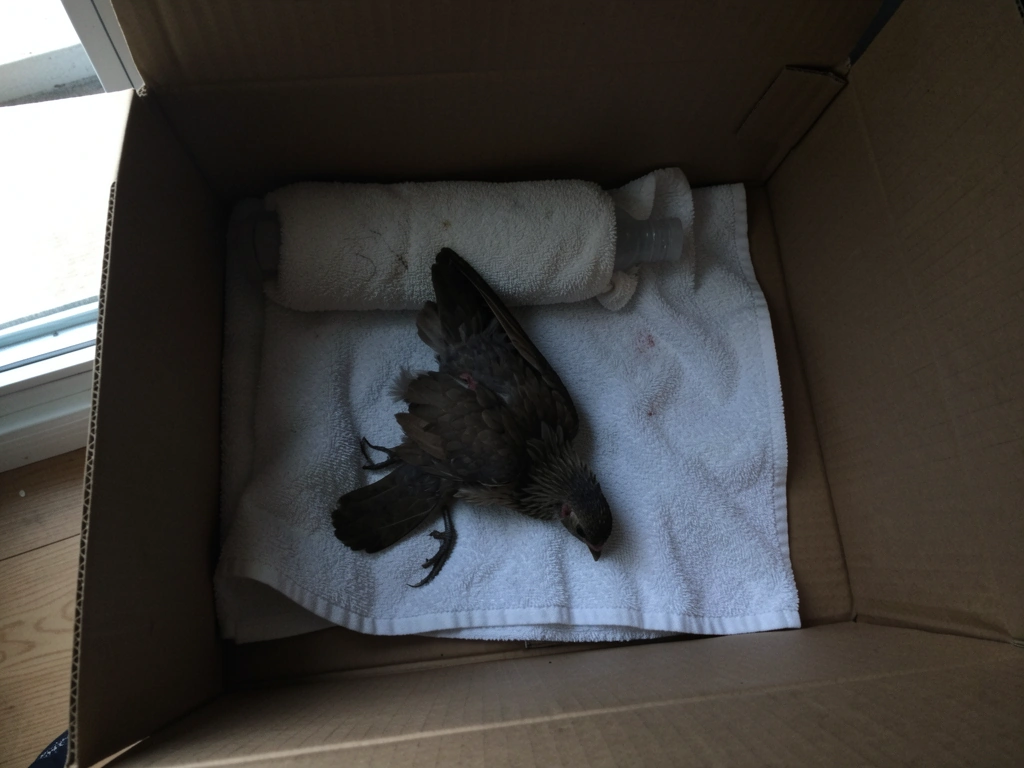
While you're waiting to get the bird to a rehabber, your only job is to keep it alive and as calm as possible. That means warm, dark, quiet, and undisturbed. This isn't the time to check on it frequently, show it to family members, or try to get it to eat something.
Temperature matters a lot. A bird in shock or with a serious injury loses body heat fast. The warm-water-bottle-in-a-towel trick mentioned above is one of the most useful things you can do. Aim for a warm room temperature environment, not hot. If the bird is panting or holding its wings out away from its body, it's too warm.
Do not offer food or water. This is consistent advice from every wildlife organization, and it's important enough to say twice. Giving water to a bird in shock or with a serious injury can cause it to aspirate (inhale fluid into its lungs), which can kill it. Birds also have very specific dietary needs, and offering the wrong food causes additional stress and potential harm. The Wildlife Center of Virginia, Tufts Wildlife Clinic, The Raptor Trust, and others all say the same thing: no food, no water, unless a licensed rehabilitator specifically tells you otherwise.
Check on the bird once every 30 to 45 minutes by listening, not opening the box. If you can hear movement, that's a good sign. If you need to look, do it quickly and calmly in a quiet room, then close the box again immediately.
On recovery timelines: wing injuries in wild birds vary enormously. A minor sprain might resolve in days under proper care, while a fracture can take six weeks or more of rehabilitation before a bird can be released. Some injuries, particularly compound fractures or injuries to the flight feathers themselves, may mean the bird can never be released. A wildlife rehabilitator will be able to assess the prognosis once they examine the bird.
What NOT to do (dangerous mistakes and myths)
This section matters as much as everything above. Some common instincts people have when they find a hurt bird can seriously worsen the outcome.
- Do not try to straighten or splint the wing yourself. Without knowing exactly where the fracture is and how to immobilize it correctly, you are very likely to cause additional damage to bones, blood vessels, and nerves.
- Do not give food or water under any circumstances unless a licensed rehabilitator specifically instructs you to. This includes bread, birdseed, worms, fruit, or anything else. Aspiration is a real and serious risk.
- Do not apply any human medications, antiseptics like hydrogen peroxide, or antibiotic creams to the wound. Many substances that are safe for humans are toxic to birds.
- Do not attempt to make the bird fly to test if it's okay. If it could fly, it would already be gone. Forcing flight with a wing injury can turn a treatable fracture into an irreparable one.
- Do not keep the bird in a wire cage or mesh enclosure for transport. Wings catch on wire and feathers get damaged. Cardboard boxes are safer.
- Do not handle the bird more than necessary. Every time you pick it up, examine it, or show it to someone, you're adding stress that depletes energy the bird needs for survival and healing.
- Do not put the bird outside 'to let it rest' unless it's inside a secure container. A grounded injured bird is an easy target for cats, dogs, foxes, and other predators.
- Do not assume a bird that looks calm and quiet is fine. Stillness in a wild bird that lets you approach it is usually a sign of serious illness or shock, not recovery.
- Do not leave it for tomorrow. Wing injuries don't improve on their own overnight. Delays reduce survival odds significantly, especially if there's a cat bite involved or the bird is in shock.
Your next steps right now
If you're reading this with an injured bird in front of you, here's exactly what to do in the next ten minutes. Get a box. Put a towel in the bottom. Gently cover the bird with a cloth and place it in the box. Add a warm (not hot) water bottle wrapped in a towel to one end. Close the box and put it somewhere quiet. Then pick up your phone and find your nearest wildlife rehabilitator or avian vet. Call them, describe what you see, and follow their instructions.
You've already done the most important thing by looking up what to do instead of guessing. Wing injuries are almost never a situation where waiting and watching is the right call. The sooner the bird is in the hands of someone trained to treat it, the better its chances. Keep it calm, keep it warm, and get it there.
FAQ
How long can I wait before transporting a bird with a hurt wing?
If the bird is actively bleeding, non-responsive, breathing with difficulty, or was attacked by a cat or dog, treat it as an emergency and stop trying to “wait for it to calm down.” Otherwise, plan for transport to a wildlife professional within 1 to 2 hours, longer only if they explicitly tell you to hold it.
Should I use ice or cold packs on the injured wing?
Do not put ice on the wing, because cold can worsen shock and reduce blood flow. Use a warm environment and, if you can, a warm water bottle wrapped in a towel placed near one end of the container so the bird can move away if it gets too warm.
Can I move the bird to check whether the wing is broken?
If you have to move the bird, do it gently and briefly, using a towel to protect your hands and supporting the body so the wing is not pulled or twisted. The key is to prevent further injury while minimizing struggling, not to “test” the wing.
What if the bird seems thirsty or keeps opening its beak, can I give water?
Avoid giving any liquid or food. Even water can be dangerous if the bird aspirates while in shock, and the wrong food can cause gut issues. Only a licensed rehabilitator or vet should give feeding or medication instructions.
The bird is awake and calm, but it cannot fly. Do I still need a vet or rehabber?
If the bird is alert but cannot fly, it still needs professional care, because wing fractures and dislocations often look “manageable” until swelling or instability progresses. Keep it contained, warm, dark, and transport urgently.
Should I keep the bird outdoors and watch it until I can get help?
If you find the bird in a safe outdoor spot, containment is still best. Put it in a ventilated carrier or cardboard box and keep it quiet, because stress and temperature loss start quickly even if you plan to monitor it.
Can I release the bird after it looks better in the box?
Never release it “to see if it can fly.” Many birds with wing injuries survive the moment but cannot fully heal without proper immobilization and monitoring, and release too early can lead to permanent disability or death.
What if I have medical tape or a splint at home, can I bandage the wing?
Do not try to wrap, tape, or splint the wing unless instructed by a wildlife professional. Improvised bandaging can cut off circulation, change how the bird holds its wing, and cause deeper tissue damage during transport.
What kind of container is safest for transporting an injured bird?
For a transport container, use one secure, ventilated box or carrier sized so the bird cannot tumble much, but not so cramped that it can’t rest. Skip wire cages, and do not line the sides with material the bird can hook and flap against.
How often should I check on the bird while waiting for help?
Do not handle more than necessary and do not let others touch it. Limit check-ins to listening every 30 to 45 minutes, because frequent opening increases stress and can trigger worsening shock.
How do I tell if the bird is too cold or too warm during first aid?
If it is cold, pre-warm your transport area, and use a warm water bottle wrapped in a towel at one end of the container, not directly against the bird. If the bird pants, spreads wings out, or feels very hot, remove some warmth and move to a cooler indoor spot.
Next Article
Injured Bird of Prey What to Do Right Now: Safe Steps
Step by step actions for injured bird of prey: first aid, safe handling and transport, and when to call rehab.