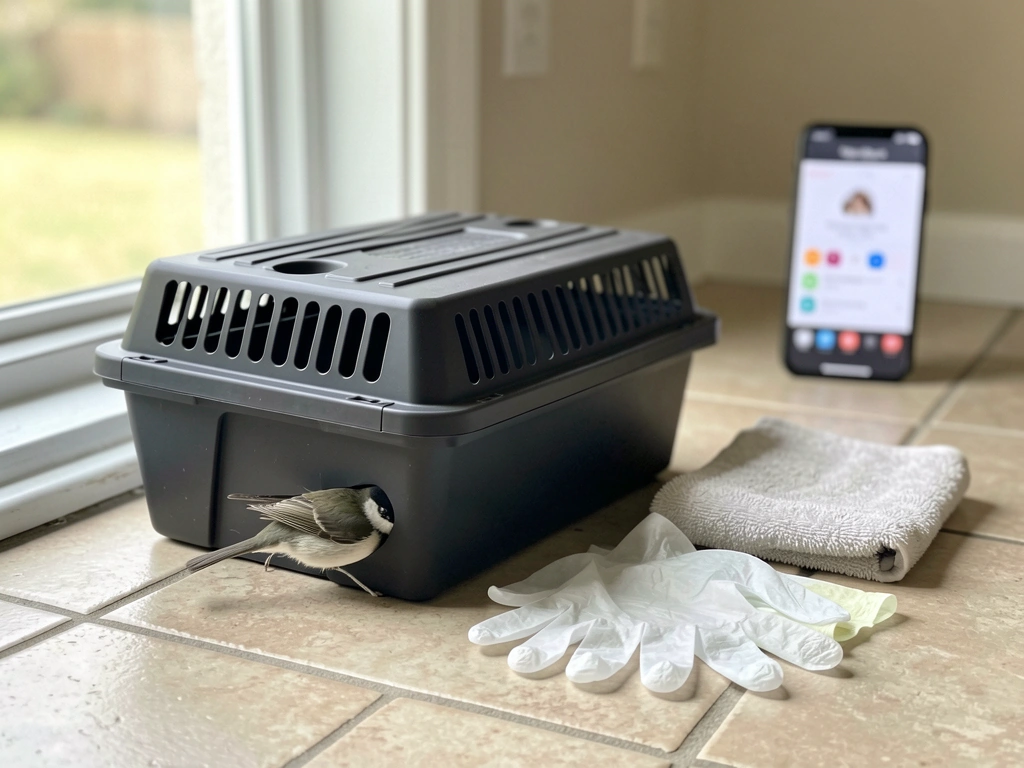
If you've found a wild bird that looks hurt, here's the short answer: contain it safely, keep it warm, dark, and quiet, do not feed or water it, and get it to a licensed wildlife rehabilitator as fast as you can. Everything else in this guide is about doing those steps correctly so you don't accidentally make things worse.
Wild Bird Hurt: What to Do Right Now Step by Step
Marcus Chen
23 Mar 2026
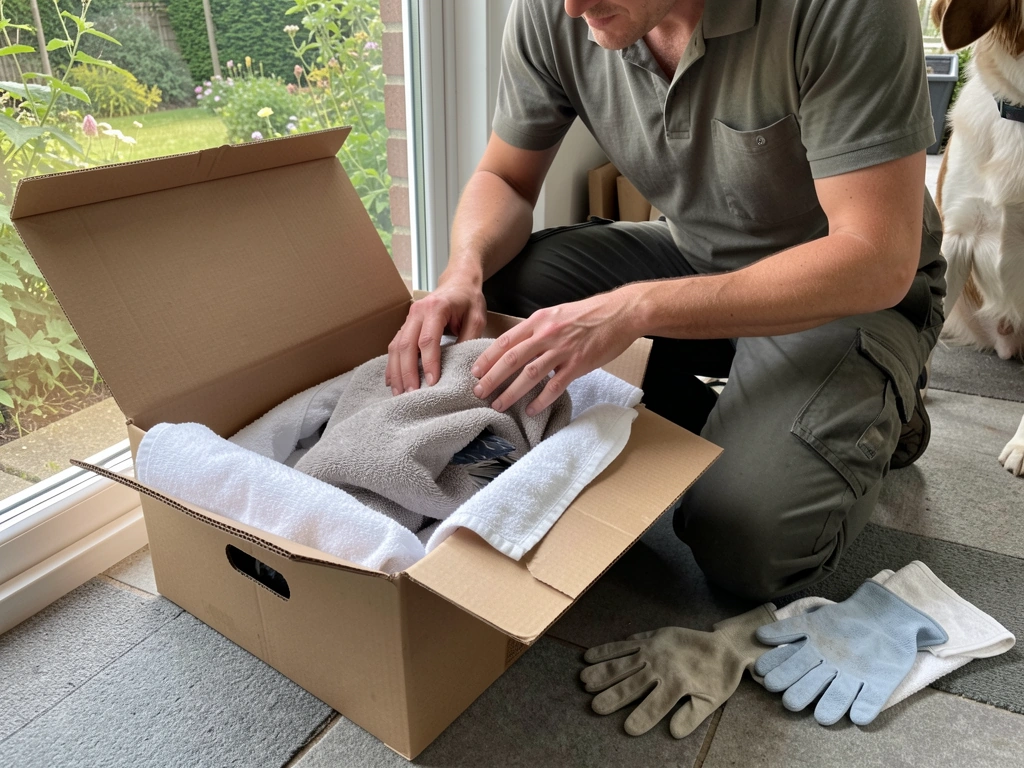
Stop here first: what not to do
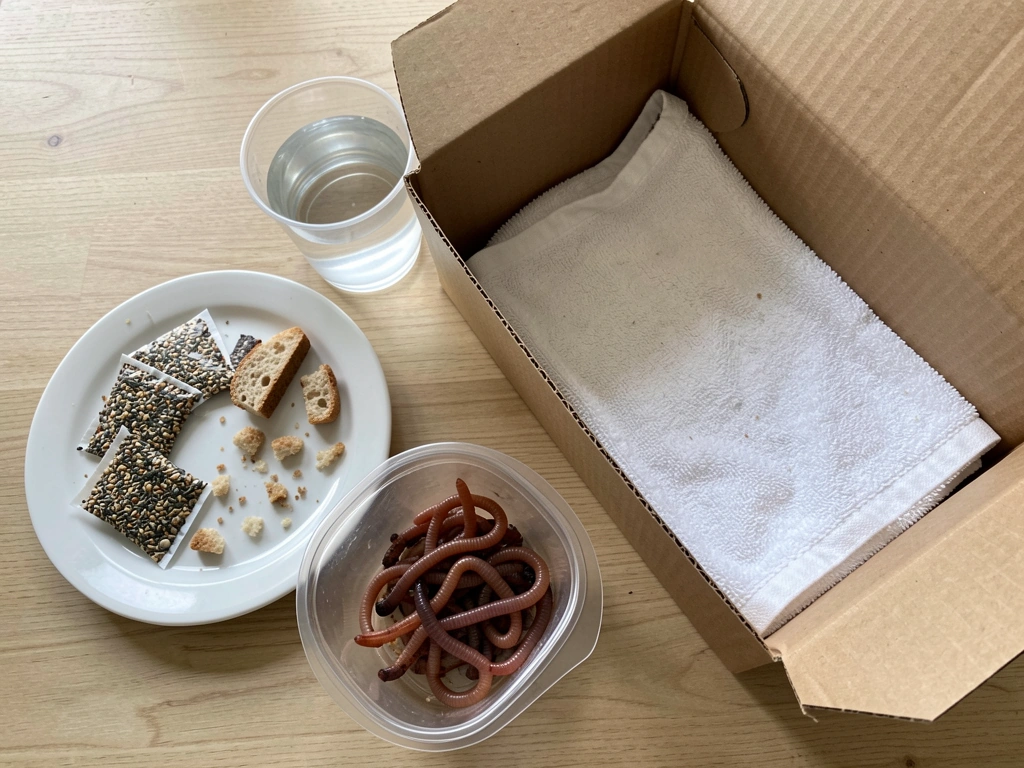
Before anything else, know that a few well-meaning moves can actually kill an injured bird faster than the original injury. The big ones to avoid:
- Do not feed the bird anything. No bread, no seeds, no worms, no water. Even giving water to an emaciated or injured bird can cause it to die. Every major wildlife organization says the same thing: no food, no water unless a rehabber specifically tells you otherwise.
- Do not try to treat the injury yourself. Splinting a wing, pulling out a hook, cleaning a wound with antiseptic — these actions without proper training cause more damage and stress, and stress alone can kill a bird.
- Do not give the bird any medications, including over-the-counter pain relievers. Human and pet medications are toxic to most birds.
- Do not handle the bird more than you have to. Every touch, every second of contact is stressful. Get it contained and leave it alone.
- Do not put the bird in a sealed container. It needs airflow.
- Do not assume every bird on the ground is injured. More on this below.
Keep yourself safe while you help
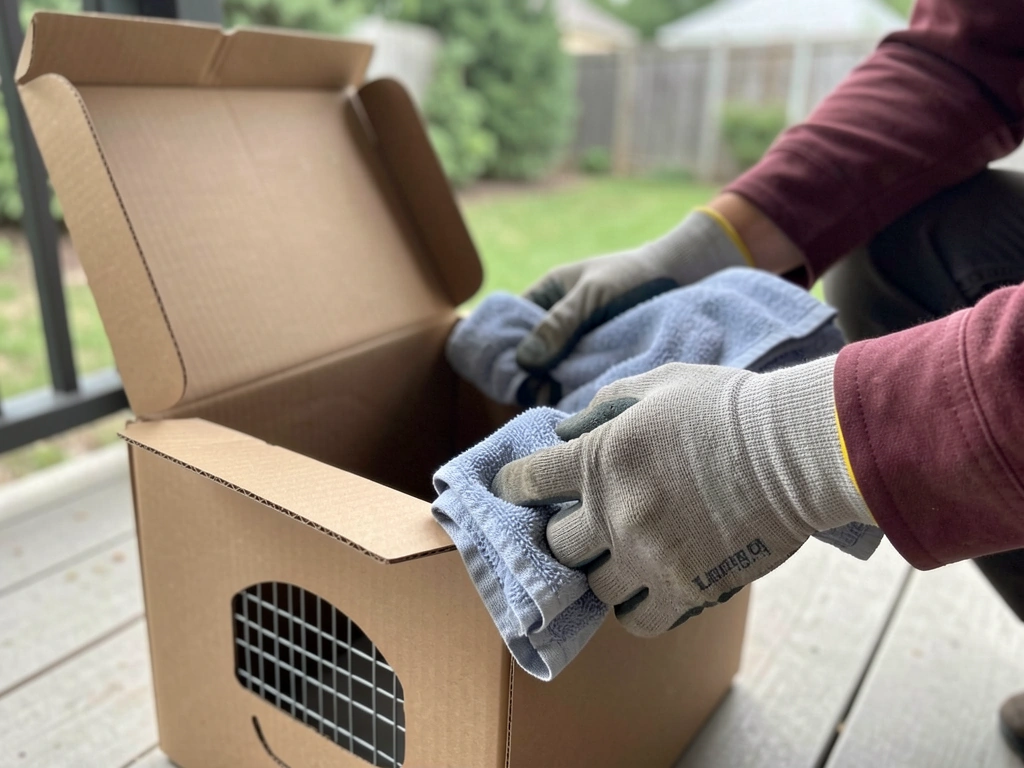
An injured bird is still a wild animal, and it will bite, scratch, or claw you if it can. Raptors (hawks, owls, eagles) have talons that can pierce skin deeply. Herons have sharp beaks that strike fast. Even a small songbird can draw blood. Before you approach, find a pair of thick gloves if you have them. If not, grab a towel, a jacket, or any fabric layer between your hands and the bird. Keep your face away from the bird's beak and feet at all times. If any part of a wild bird's body punctures your skin, clean the wound immediately and contact your doctor, since some birds carry salmonella and other pathogens.
Is the bird actually injured? Check this first
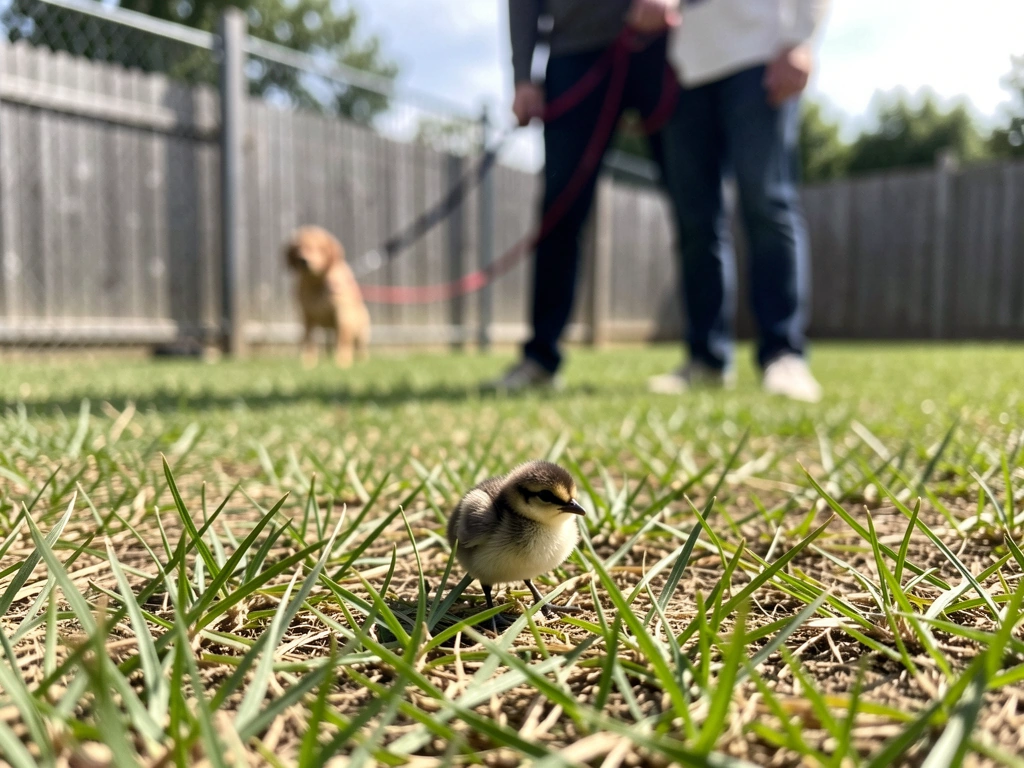
One of the most common calls wildlife rehab centers get is about fledglings that don't need rescuing at all. A fledgling is a young bird that has left the nest but can't fly well yet. It sits on the ground or low branches, looks a little fluffy, and may have a short tail. Its parents are almost certainly watching from nearby. This is completely normal bird behavior. Scooping it up and bringing it inside removes it from its parents and significantly reduces its chance of survival.
So before you touch the bird, watch it from a distance for a few minutes. Is it hopping around? Responding to sounds? Moving away from you with some energy? If yes, it's probably fine. Leave it alone and keep pets and children away from the area.
A bird that genuinely needs help will usually show one or more of these signs:
- Visible bleeding or open wound
- Wing drooping or hanging at an abnormal angle
- Unable to stand or keep its head up
- Sitting still and allowing you to approach closely without flying or hopping away
- Eyes closed or sunken
- Breathing with its mouth open or with visible effort
- Wet or oily feathers that look matted
- Tangled in fishing line, netting, or other material
- Found next to a window, building, or road where an impact likely occurred
- Baby bird with no feathers or very few, clearly fallen from a nest
Intervention is generally appropriate when the bird shows clear signs of injury or when you've found a nestling (a very young, mostly featherless bird) and you can see the nest above you. U.S. Fish and Wildlife Service guidance is clear that you should step in only when the animal is clearly hurt, not just because it's close to you.
How to safely pick up and contain an injured wild bird
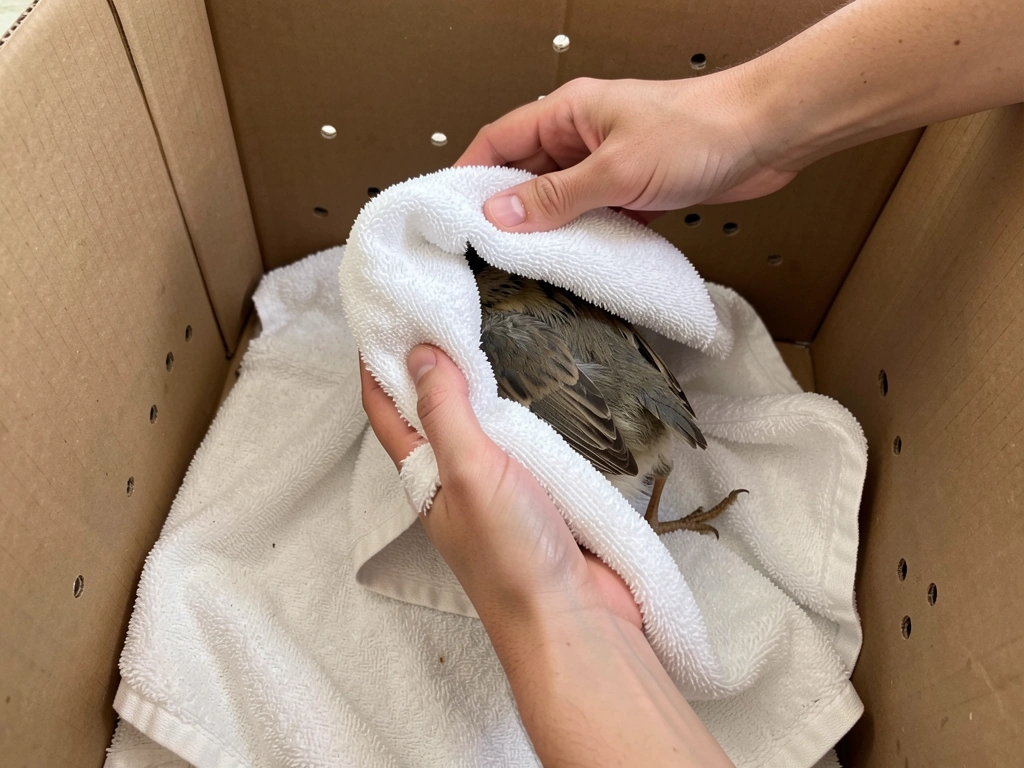
The goal here is to get the bird into a container quickly with as little handling as possible. Here's what works: keep it warm, dark, and quiet, keep it warm, dark, and quiet, do not feed or water it, and get it to a licensed wildlife rehabilitator as fast as you can.
- Find a cardboard box large enough that the bird isn't crammed in, but not so large that it can flap around and re-injure itself. A shoebox works for small birds; a larger moving box for big ones. Poke several small holes in the lid or sides for ventilation.
- Put a folded towel or paper towels on the bottom of the box so the bird has grip and cushion.
- Put on your gloves or grab a towel. Approach the bird slowly and calmly. Loud movements and fast approaches cause panic.
- Drape the towel over the bird completely, covering its head. Darkness calms birds almost immediately.
- With both hands through the towel, gently but firmly wrap the bird and pick it up. Hold the wings against the body so it can't flap. Support its body weight from underneath.
- Lower the bird into the box, release gently, and close the lid quickly.
- Place the box in a warm, quiet spot away from pets, children, and noise. Avoid direct sunlight.
That's it. Don't peek at the bird repeatedly. Don't carry the box around showing people. Don't let kids tap on it. The bird is in shock, and every additional disturbance costs it energy it needs to survive. During transport, keep noise and conversation to a minimum inside the vehicle.
Keeping the bird warm (and when not to)
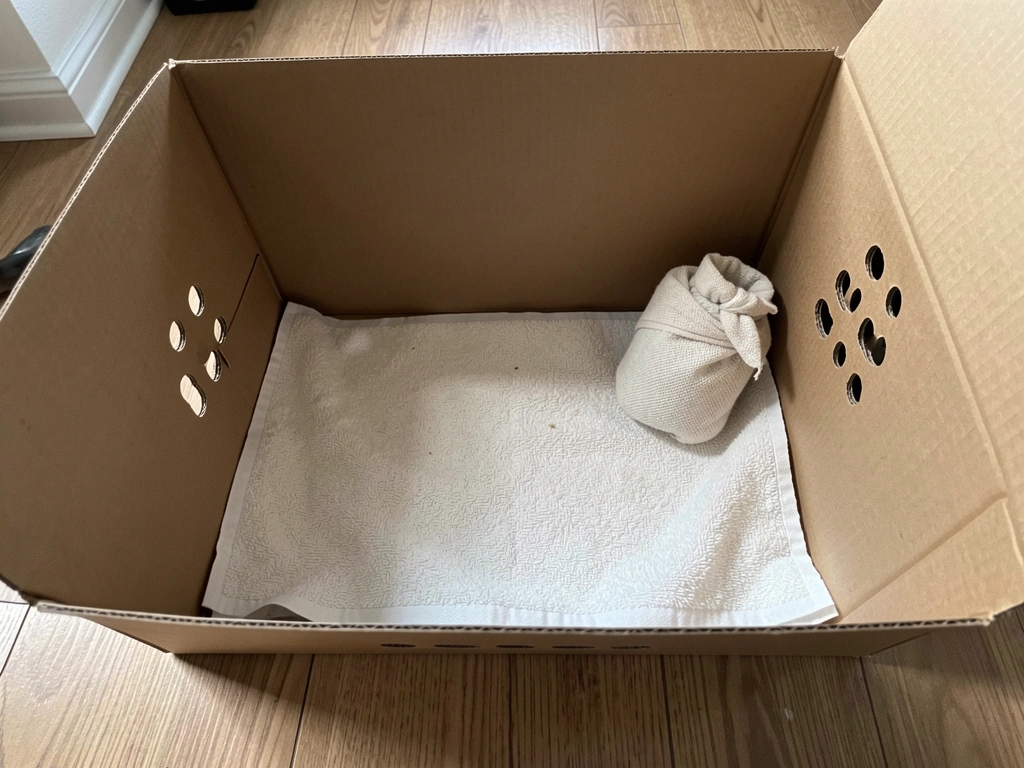
Small birds, baby birds, and birds that appear cold or wet need gentle warmth. You can place a hot water bottle wrapped in a towel next to (not under) the bird inside the box. The key is that the bird must be able to move away from the heat source if it gets too warm. Never put a heat lamp directly on the bird, and never use a heating pad set to high or placed under the entire box floor. A bird that's overheated can't escape the heat and will die. For birds that seem alert and warm to the touch already, skip additional heat entirely.
When and how to contact wildlife rehab
Contact a licensed wildlife rehabilitator as soon as the bird is contained. Don't wait to see if it improves. Do not attempt to care for the bird at home beyond basic containment. In most U.S. states and many other countries, it is actually illegal to keep a wild bird without a permit, even temporarily with good intentions. Licensed rehabilitators hold Federal Migratory Bird Rehabilitation permits and have the training and facilities to give the bird a real chance.
To find help fast, try these options:
- Search for 'wildlife rehabilitator near me' or visit animalhelpnow.org, which maps local resources by your location.
- Call your nearest wildlife rescue center, wildlife hospital, or humane society.
- In the U.S., contact your state's fish and wildlife agency for a referral.
- In Australia, call WIRES (1300 094 737) or your local RSPCA.
- In the UK, call the RSPCA (0300 1234 999) or the SSPCA in Scotland.
- For raptors specifically, search for a licensed bird-of-prey rescue or raptor center in your area, as some facilities specialize and may not accept all species.
When you call, have the following ready: your name, your location (be specific about the address or nearest intersection where you found the bird), a description of the species if you can identify it, the bird's approximate size, what condition it's in, and how long ago you found it. A photo is genuinely useful, so take one from a safe distance before you contain the bird if you can do it quickly. This information helps the rehabber triage urgency and tell you where to go.
If you don't hear back within a few hours after calling, don't assume the situation is handled. Call a different rehabilitator. Some facilities can't take every species or may be at capacity. Keep trying. If you call after 6 PM and don't get a response, try again first thing the next morning and contact a second facility in the meantime.
Different injuries, different immediate steps
Most of your job is the same regardless of the cause: contain, keep calm, call for help. But a few common scenarios have some specific first-response details worth knowing.
Window or vehicle strike
Birds that hit windows or cars are often in shock but not necessarily severely injured. If you find a bird stunned near a window, give it 15 to 20 minutes in a quiet, contained, dark box away from predators before concluding it needs professional care. Some recover quickly. If it's still unable to fly, unresponsive, or showing signs like bleeding or a drooping wing after that window, it needs a rehabber. Do not leave it outside uncontained, since cats and other predators will find it.
Fishing line or netting entanglement
This is an urgent situation. Fishing line wraps around legs, wings, and necks, cutting off circulation within hours. The general guidance from multiple wildlife organizations is: do not pull hooks out of the bird, do not cut the line unless you absolutely cannot transport the bird otherwise, and control the bill before anything else to protect yourself. If you must cut loose some line to safely transport the bird, cut it as close to the bird as possible and bring all the line with you so the rehabber can see what they're working with. Get this bird to a facility fast.
Suspected broken wing
A wing hanging at an odd angle, dragging on the ground, or held out to the side is a strong sign of a break. Do not try to splint it. Do not try to straighten it. Contain the bird gently with the wings held softly against the body and get to a rehabber. Broken wings can sometimes be set and healed with proper veterinary care, but only if the bird hasn't been further stressed or injured in the process.
Visible bleeding
Light bleeding may slow on its own once the bird is calm and contained. Do not attempt to bandage or clean the wound unless you are instructed to by a rehabber over the phone. The towel technique for containment will naturally apply gentle pressure. Get the bird to help as quickly as possible, since blood loss and infection are serious threats.
Cold, wet, or dehydrated bird
A bird that's wet, cold to the touch, or appears weak and disoriented may be suffering from hypothermia or dehydration. Warmth is the one thing you can safely provide here: gentle indirect heat in a dark, quiet box. Do not try to give water. A bird that's too weak to swallow properly can inhale liquid and die. This is exactly the kind of situation where warmth, calm, and a fast trip to a rehabber make the difference.
Baby bird (nestling) out of the nest
If the bird is mostly featherless or has very short, sparse feathers, it's a nestling and genuinely needs help. If you can see the nest above you and safely reach it, placing the bird back in is the best option. The myth that a parent will reject a chick because you touched it is false. If you can't reach the nest or it's destroyed, contain the bird with warmth and call a rehabber immediately. Do not feed it.
Setting up temporary housing while you wait
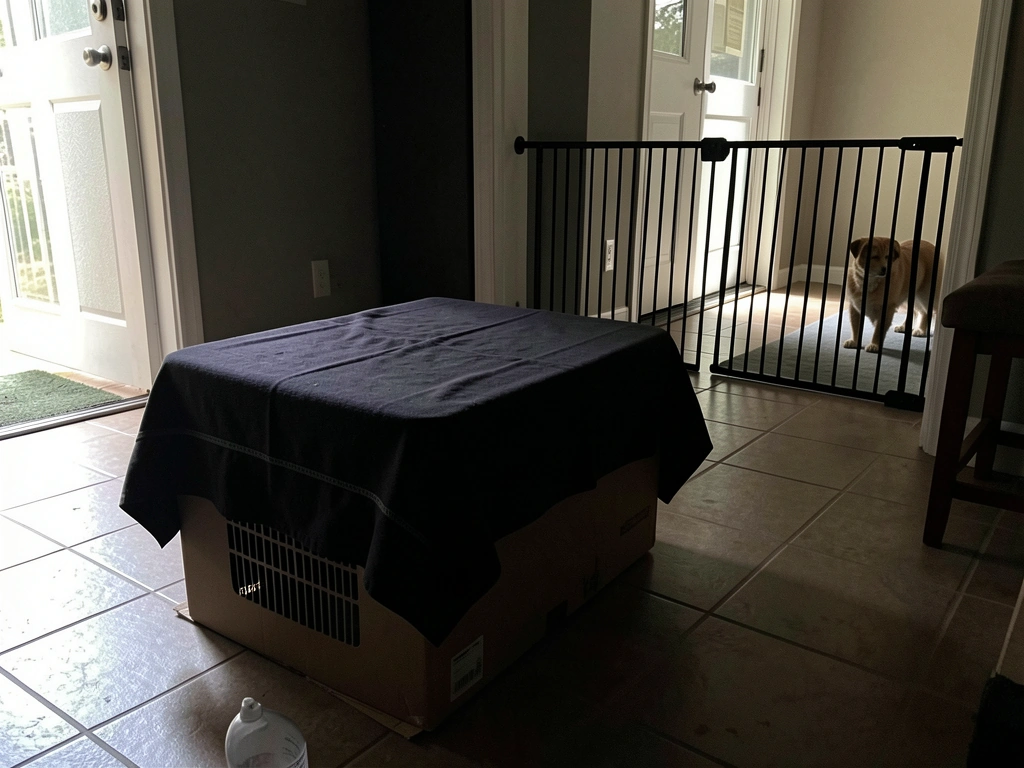
If you can't get the bird to a rehabber the same day (which should be a last resort, not a plan), here's how to set up a holding situation that won't make things worse:
- Use a ventilated cardboard box or a pet carrier with a secure lid. Line the bottom with a towel or paper towels for grip.
- Place it in a warm (not hot), quiet room away from household activity. A spare bathroom or laundry room works well.
- Keep it completely away from cats, dogs, and other pets. Even the smell of a predator causes extreme stress.
- Do not open the box to check on the bird repeatedly. Every peek is a stress event.
- Keep the room dark or use a cover over the box to maintain darkness.
- If you suspect the bird is cold, place a lightly warm (not hot) water bottle wrapped in a cloth against one side of the box interior, leaving room for the bird to move away from it.
- Do not provide food or water under any circumstances unless a licensed rehabber has specifically told you what to give and how.
This setup is temporary triage, not care. The bird needs professional attention. Keep calling and trying to reach a rehabber.
What happens after the rehabber takes over
Once you hand the bird off, your job is essentially done. Licensed rehabilitators will do a full assessment, provide veterinary care if needed, and manage the bird through recovery. Treatment timelines vary enormously depending on the species and injury. A stunned window strike bird might be released in 24 hours. A bird with a broken wing or severe fishing-line injury might need weeks or months of care.
One thing worth knowing: try not to talk to or interact with the bird while it's in your care, beyond what's necessary for containment. Wild birds that become too comfortable around humans are much harder to release successfully. This is called imprinting, and it's especially a risk with baby birds. The less contact, the better for the bird's long-term outcome.
You might be wondering whether you can follow up on the bird's progress. Many rehabilitation centers are understaffed and can't always give updates to every person who brings an animal in, but it's completely reasonable to ask when you drop it off. Some centers will let you know when the bird is released.
The goal of wildlife rehabilitation is always release back to the wild. Not every bird makes it, but your quick, calm action gives it the best possible chance. Containment, warmth, quiet, no food or water, and fast contact with a professional: that's the whole job, and you can do it.
Quick reference: do this, not that
| Do this | Not that |
|---|---|
| Contain the bird in a ventilated cardboard box | Keep it in an open container or your hands |
| Line the box with a towel for grip and cushion | Use bare cardboard or slippery surfaces |
| Use gloves or a towel to handle the bird | Pick it up with bare hands near its face or feet |
| Keep it warm, dark, and quiet | Put it in a bright room with noise and foot traffic |
| Call a licensed wildlife rehabilitator immediately | Try to treat or rehab the bird yourself at home |
| Observe a bird on the ground before intervening | Automatically scoop up every bird you see outside |
| Take a photo for the rehabber before containing | Handle the bird repeatedly for identification |
| If fishing line is involved, control the bill and transport fast | Pull hooks out or cut the line carelessly |
| Keep pets away from the bird at all times | Let cats or dogs near the box |
| Call a second rehabber if the first doesn't respond | Wait and hope the first call works out |
FAQ
What container should I use for a wild bird hurt what to do rescue, and how do I set it up safely?
Use a ventilated box or carrier that the bird can’t push against, with towels or paper for a non-slip base. Cut off unnecessary openings, keep the bird’s head and feet from contacting bare surfaces, and avoid using a cage where it can injure itself by throwing its body around.
Can I drive with the box in the passenger seat, or is there a safer way to transport?
Keep the container secured so it cannot tip or slide, ideally with the lid closed and away from loose items that could hit it. Minimize noise and sudden movements, and do not let anyone stop for “just a minute” to let the bird be seen, since extra disturbance increases stress.
Should I cover the bird completely with a towel or leave part of it uncovered?
You should darken and quiet the environment, but do not press fabric directly onto the bird’s body in a way that traps heat or restricts breathing. If using a towel, lightly drape it so air can move and the bird cannot get its beak or feet tangled.
My cat brought me a bird. Is that handled differently from other wild bird hurt situations?
Yes, treat it as higher risk. Contact a rehabilitator immediately because bites and claw punctures can introduce infection even if there’s no obvious bleeding. Keep your hands protected and do not try to “clean it up” or remove debris unless instructed.
What if the bird is breathing but not moving much, should I still wait for signs before calling?
Do not wait if it appears unresponsive, weak, bleeding, or unable to stand or fly normally. Breathing can continue even in shock or hypothermia, and delaying reduces survival chances. Contain, warm gently if cold, and call right away.
Can I give the bird water even if it seems thirsty?
Do not provide water or food. If a bird cannot swallow properly, liquid can be aspirated into the lungs. In dehydration or disorientation, warmth and a calm, contained setup is the safest immediate step.
What if I have to keep the bird longer than a few hours before the rehabber can take it?
Do a strict temporary holding triage: keep it warm, dark, and quiet, with minimal handling, and keep it isolated from pets and people. Monitor only at a distance for major changes, but avoid repeated “checking,” since stress can worsen outcomes.
When is it appropriate to consider that a bird is a fledgling that doesn’t need rescuing?
If it is alert enough to hop, respond to sounds, and is moving away from you with some energy, it is likely fine where it is. The key is location and behavior, fledglings are often grounded temporarily while parents watch nearby, so the better move is to keep pets away and avoid scooping.
How can I tell if I should intervene for a nestling versus leaving it alone?
If the bird is very young, mostly featherless, and you can see the nest above you, returning it to the nest is often the right choice. If you cannot reach the nest safely, the nest is destroyed, or the bird appears cold and weak, contain it and contact a rehabber immediately.
What if the bird has visible blood, should I clean the wound or apply ointment?
Unless a rehabber tells you otherwise over the phone, do not bandage, flush, or apply products. Light bleeding may slow as the bird calms, and incorrect cleaning or creams can trap contamination or delay proper veterinary treatment.
What if I find a bird entangled in something and I cannot transport it right away?
Treat entanglement as urgent. Do not pull on line or remove hooks unless the rehabber instructs you, because cutting or tugging can cause more tearing. If you absolutely must cut line to safely transport, cut as close as possible and keep the removed material with the bird for the rehabber.
Is it okay to try to straighten a wing that looks bent?
No. Do not splint or force the wing back into place. Contain the bird gently with the injured wing held softly against the body, since stabilizing it for transport and getting veterinary-level care is safer than attempting a fix in the moment.
If a window strike bird seems okay after 15 to 20 minutes, should I still bring it to a rehabber?
If it remains unable to fly, is drooping, bleeding, or does not regain normal responsiveness after the quiet dark rest, then it needs professional care. If it can fly away normally and there are no concerning signs, you can usually leave it alone and keep distance to confirm it moves on safely.
How do I handle wild bird hurt situations if I am afraid of getting bitten or scratched?
Use barrier protection first, thick gloves if available, otherwise towels or layers between your hands and the bird. Keep your face away from the beak and feet and limit contact to what’s needed to contain. If you cannot safely handle it, focus on containment from a distance, then call for help.
Can I release the bird myself after it seems better?
It’s risky. Birds need species-specific evaluation, and injuries like internal trauma, concussion, or fractures can appear improved while still reducing survival after release. Ask the rehabber about release timing and suitability, especially for birds that hit windows or have entanglement injuries.
Next Article
Hurt Bird: What to Do Now, First Aid and Next Steps
Step-by-step first aid for a hurt bird: safety, triage, temporary care, and when to call a rehab or vet today.