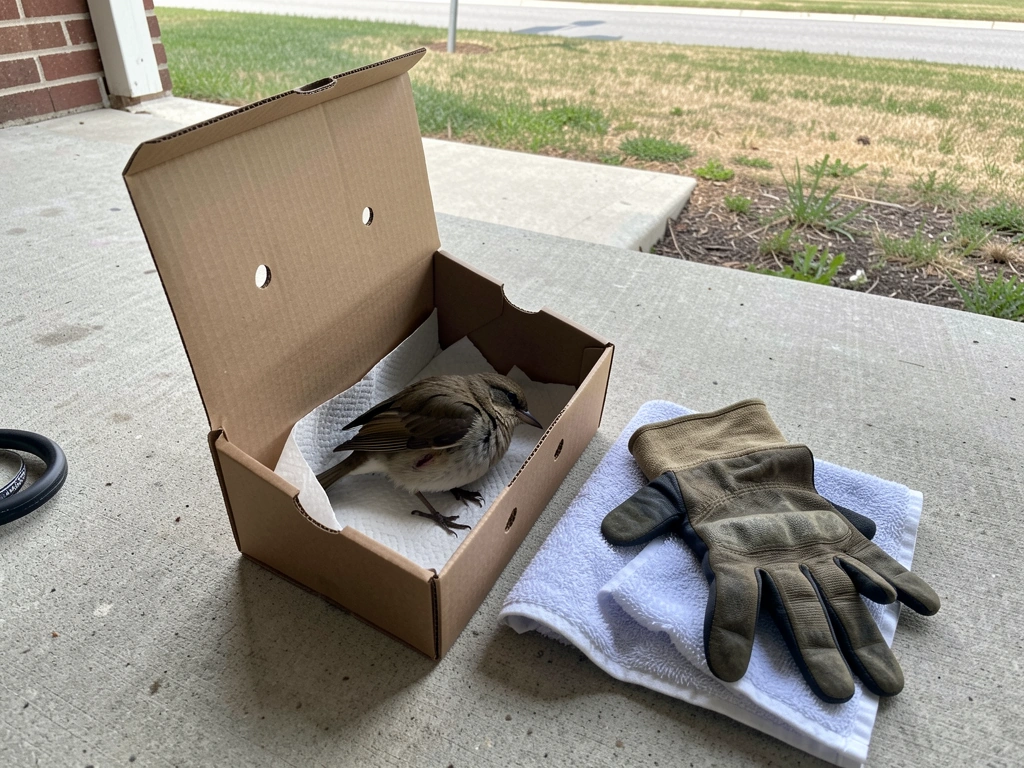
If you've found an injured bird in Australia right now, here's the short version: don't feed it, don't give it water, wrap it gently in a towel, put it in a ventilated box in a dark quiet spot, and call a wildlife rescue line immediately. in Australia right now, here's the short version: don't feed it, don't give it water, wrap it gently in a towel, put it in a ventilated box in a dark quiet spot, and call a wildlife rescue line immediately. That's it. Everything below expands on those steps so you can do them confidently and correctly. bird is injured what should i do
What to Do With an Injured Bird in Australia: First Steps
Marcus Chen
23 Mar 2026
First assess safety and the bird's condition
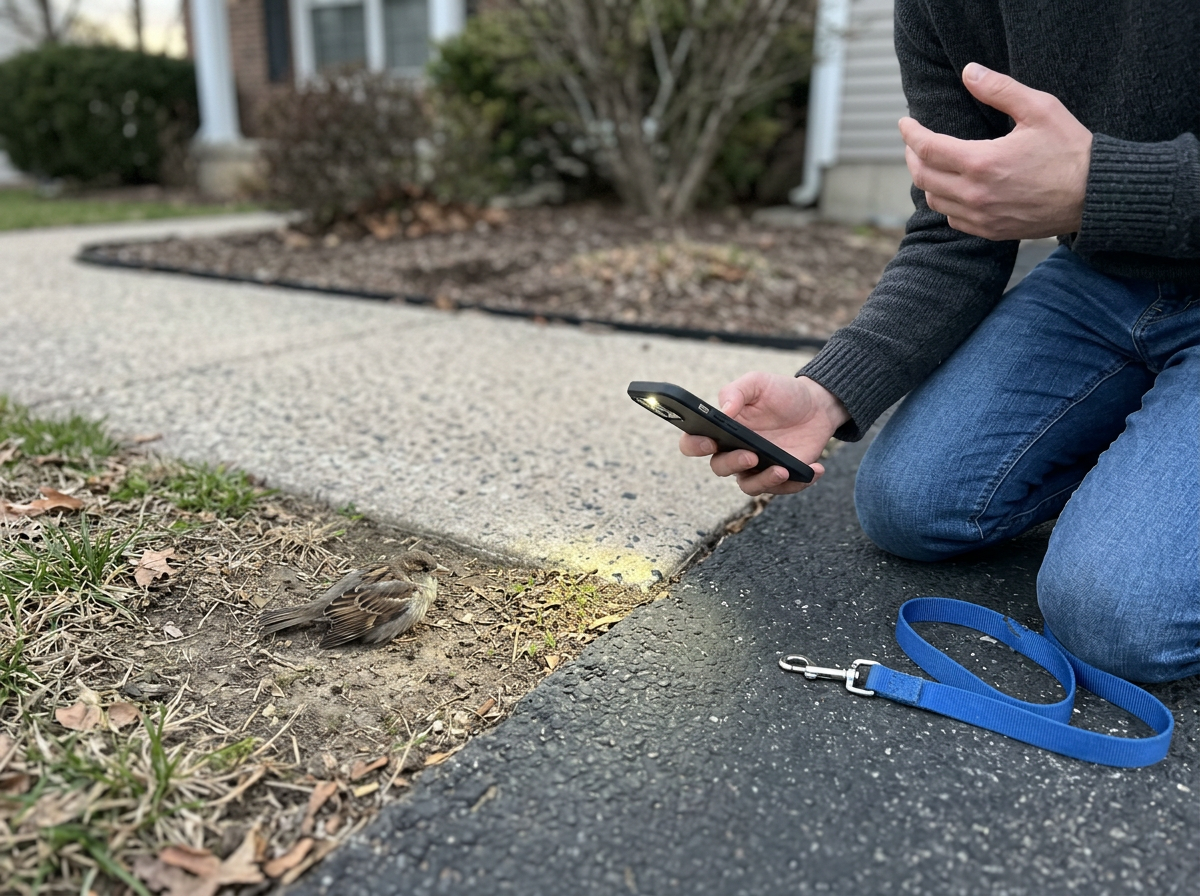
Before you go near the bird, take ten seconds to check the scene. Is the threat still there? A cat nearby, a road with traffic, a dog that hasn't been secured? Remove the danger if you safely can, or move the bird out of harm's way first. Your safety matters too. Some larger birds, including raptors and wading birds, can scratch or bite hard enough to draw blood, so thick gloves are worthwhile if you have them. Even small birds in shock can peck reflexively.
Once you're safe, look at the bird without touching it yet. Ask yourself: Is it alert and trying to move away from you, or is it sitting still and unresponsive? Is there visible blood, a wing dragging on the ground, or a leg at an odd angle? Is it a fully feathered adult or a young bird that may have come from a nearby nest? These observations take about thirty seconds and will help enormously when you call for help. A bird that's upright, blinking, and moving away from you is in better shape than one that's slumped, glassy-eyed, or letting you walk straight up to it.
Note the location carefully, whether it's under a window, near a road, in a backyard, or close to a fence line. Wildlife rescuers will ask you this, and it often tells them a lot about what happened.
Immediate first aid for common injuries
The honest truth about bird first aid is that most of it is supportive care, not medical treatment. You are not a vet, and that's completely fine. Your job is to stabilise the bird and get it to someone who can actually treat it. Here's what you can and can't do for the most common injuries.
Wings
A <link>wing dragging on the ground</link> is one of the clearest signs of a fracture. Do not try to straighten it, splint it yourself, or tape it to the body tightly. Wrapping the bird snugly in a towel will naturally hold the wing in a less painful position during transport, and that's enough. The Victorian Wildlife Rehabilitation Guidelines are explicit: fractures need a vet, not DIY first aid beyond stopping excessive bleeding.
Legs
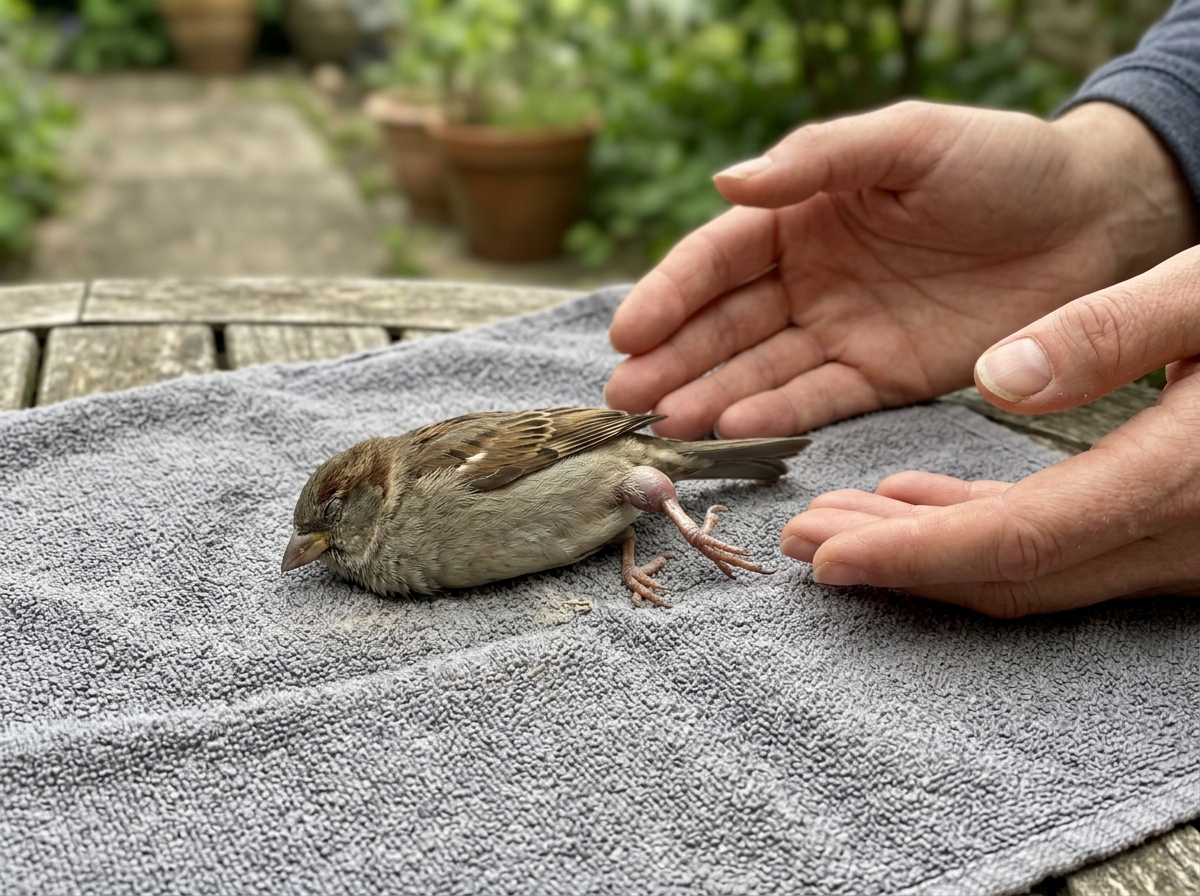
A broken or injured leg is harder to spot because birds can partially weight-bear even on a damaged leg. If you see swelling, an unnatural angle, or the bird keeps lifting one leg and can't put it down at all, treat it as an injury and get help. Again, do not try to splint or bind the leg yourself. Keep the bird on a flat, stable surface inside its container so it doesn't thrash and make things worse.
Beaks
A damaged beak is a serious injury that needs experienced rehabilitator care, full stop. A bird can't eat, drink, or preen properly with a broken beak, and there's nothing you can do to fix that at home. Keep the bird calm and contained and get it to a vet or carer as quickly as you can.
Bleeding
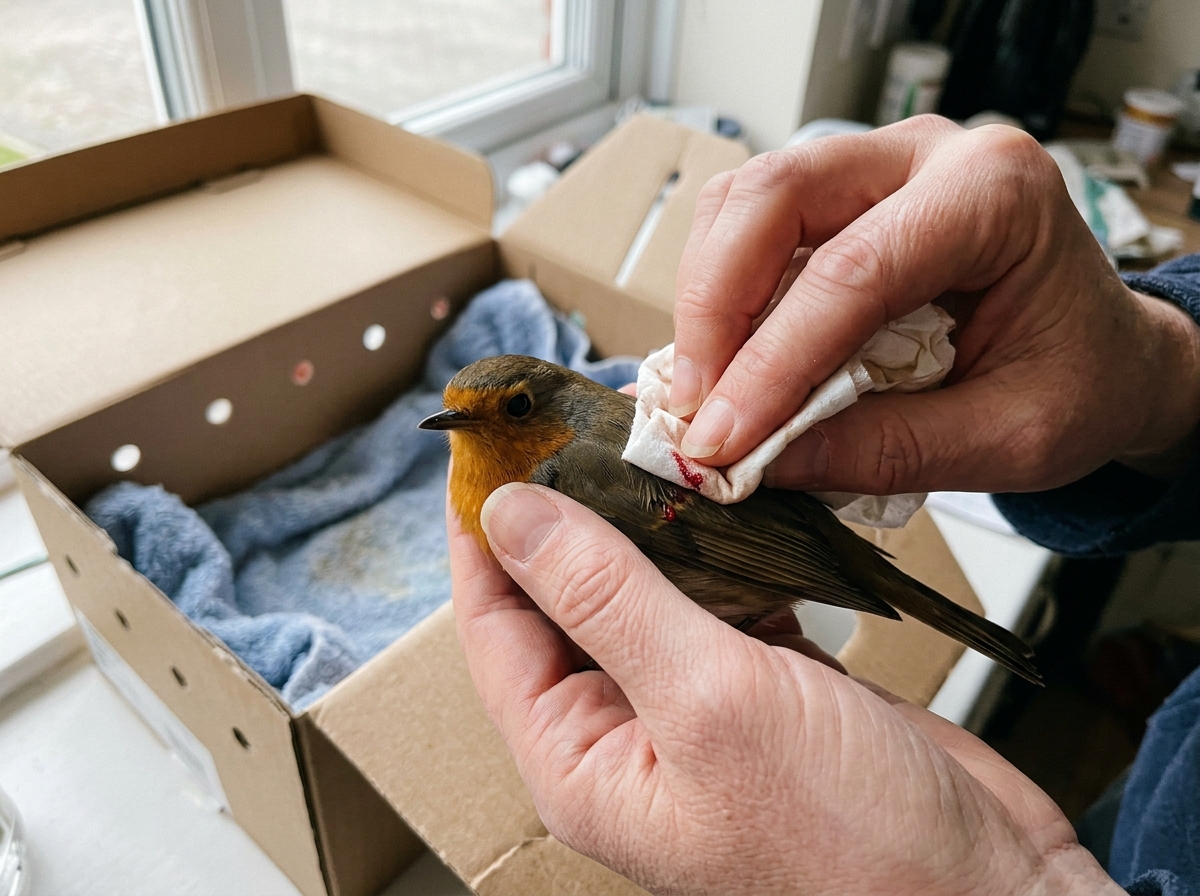
If a bird is bleeding actively, apply very gentle pressure with a clean cloth or tissue. Don't press hard, and don't use cotton wool because the fibres stick to wounds. Once bleeding slows, focus on containment and warmth rather than further wound management. Call a rescue line immediately and describe the bleeding.
Shock
Shock is common after any traumatic injury and can kill a bird even when the physical wound looks minor. Signs include fluffed feathers, rapid shallow breathing, unresponsiveness, and cold feet. Warmth and a dark, quiet environment are the two most important things you can do. Get the bird into a box in a warm spot as fast as possible.
What not to do
- Do not give food or water unless a vet or wildlife rescuer specifically tells you to. Most birds can safely go without food or water for several hours while awaiting rescue.
- Do not give any human medicines, antiseptic creams, antibiotics, or pain relief. These can be toxic or fatal to birds.
- Do not try to straighten fractured limbs or wings.
- Do not let children or other pets handle or crowd the bird.
- Do not keep checking on the bird repeatedly. Every disturbance is additional stress.
Handling, containment, and keeping the bird warm and calm
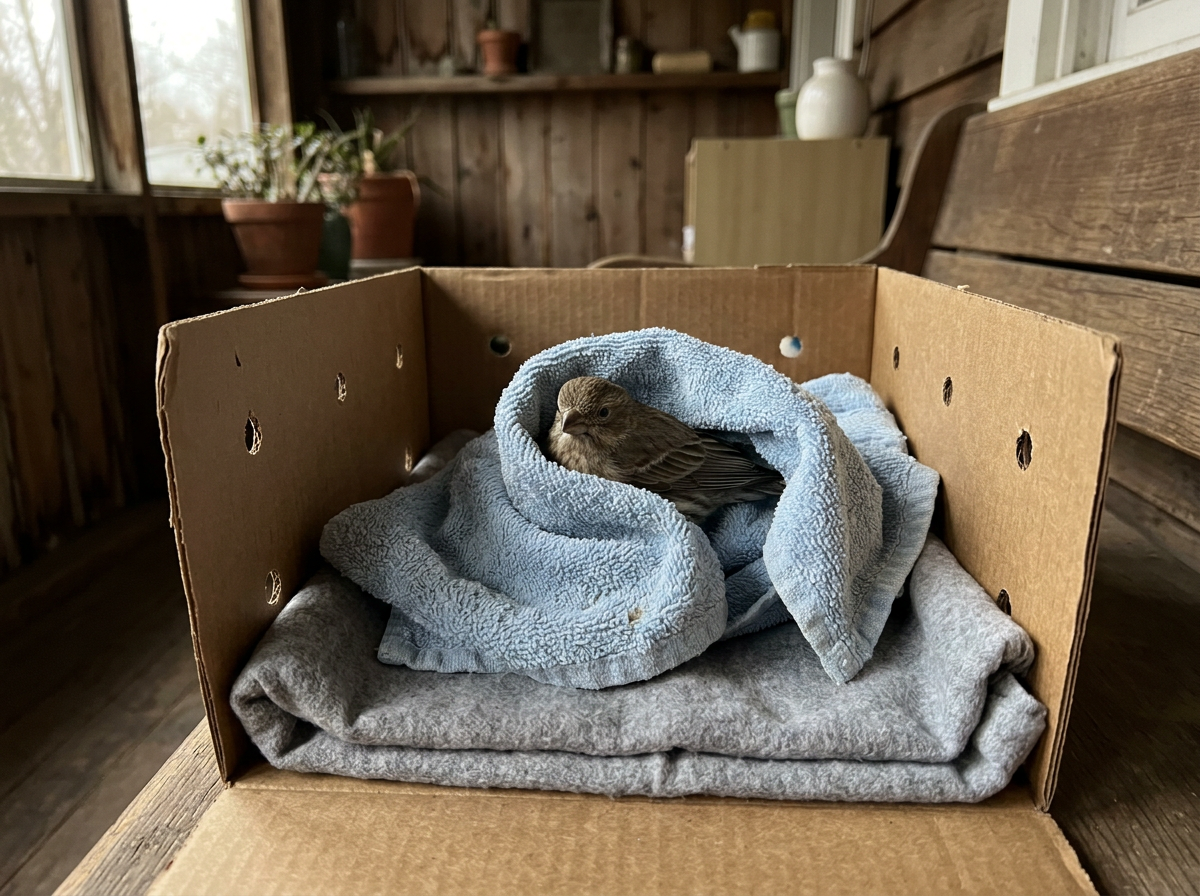
This is the part you can genuinely do well even without any rescue experience. Getting containment right makes a real difference to whether a bird survives the wait.
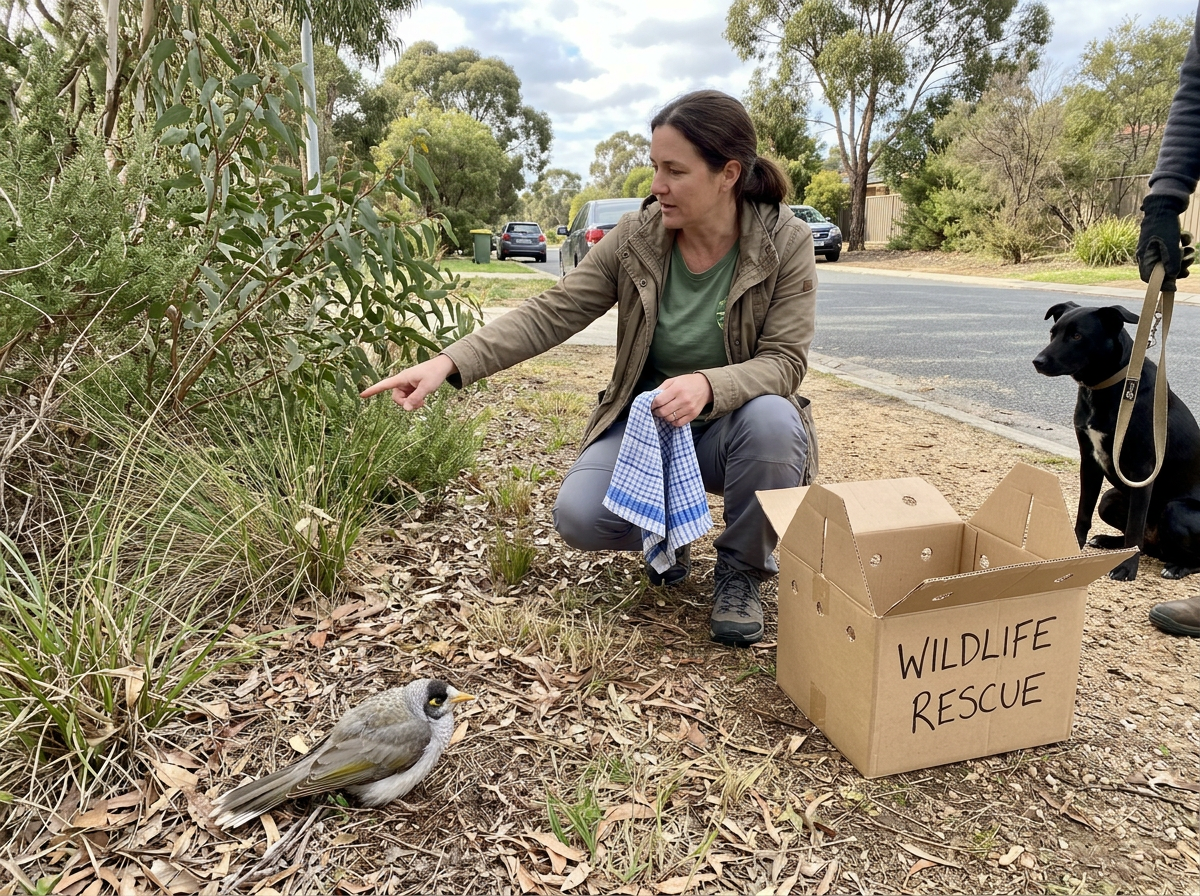
Pick up the bird by draping a towel or tea towel over it first, then scooping it up from underneath with both hands. The towel does two things: it protects your hands and it prevents the bird from seeing you clearly, which dramatically reduces panic. Hold the bird firmly but gently against your body. Don't squeeze. For larger birds, tuck the wings against the body with your hands as you lift.
Place the bird in a cardboard box or plastic container with a lid. Punch several small air holes in the sides and lid for ventilation. Line the bottom with a folded towel so the bird has a non-slip surface to grip. Don't use a wire cage if you can help it, because injured birds will batter themselves trying to escape through the bars. A closed, dark box is far less stressful.
For warmth, especially for small birds, young birds, or any bird in shock, place a heat source under one half of the box only. A plastic bottle filled with warm (not hot) tap water wrapped in a cloth works well. Putting it under only half the box lets the bird move away from the heat if it gets too warm. Do not use a heat lamp directly on the bird or put it in direct sunlight, which can overheat it quickly.
Put the box somewhere dark, quiet, and out of the way. A spare room, a laundry, or even a car with the windows slightly down works. Keep it away from loud noises, other animals, and foot traffic. Then leave it alone. Seriously, every time you open the box to check, you're adding stress. Trust the containment and make your calls.
What to do for specific situations
Window collisions
Window strikes are extremely common and often look worse than they are in the first few minutes. A stunned bird may simply need time to recover from the concussion before it can fly again. If you find a bird on the ground under a window, check it for obvious injuries first. If it's just dazed with no visible blood or broken limbs, place it in a dark, ventilated box for 30 to 60 minutes to let it recover, then take it outside and open the box. If it flies away strongly, great. If it doesn't fly or looks unsteady, treat it as injured and call for help. Don't leave a stunned bird on the ground to recover on its own because cats and other predators will find it quickly.
Cat and dog attacks
This is a situation where you should call a vet or wildlife rescue even if the bird looks completely fine. BirdLife Australia is very clear on this point: a cat or dog attack always warrants a vet check, see injured bird of prey what to do for more guidance. injured bird of prey what to do Cat saliva in particular contains bacteria that cause fatal infections in birds within hours, and the puncture wounds from teeth are often invisible through feathers. If your pet has caught a bird, secure the pet immediately, pick up the bird using a towel, contain it as described above, and get it to a vet or call Wildlife Victoria on (03) 8400 7300 if you're in Victoria. Do not wait and watch. Time genuinely matters here.
Nest emergencies and baby birds
Finding a baby bird on the ground doesn't automatically mean it needs rescuing. A fledgling (a bird with most of its feathers that's hopping around on the ground) is usually in the process of learning to fly and its parents are almost certainly nearby watching over it. The best thing to do with a fledgling that isn't injured is to leave it alone and keep cats and dogs away from the area. If you've handled it, that's fine, the parents won't reject it because of your scent.
A nestling is a different situation. Nestlings are pink, have very few or no feathers, and cannot survive on the ground. If you can see the nest and safely reach it, place the bird back in. If the nest is destroyed or unreachable, call a wildlife rescue line immediately. While you wait, keep the nestling warm using the hot-water-bottle-under-the-box method described above. Do not try to feed it. If parents don't return to the nest by dark, that's a sign something is wrong, and you should call for help.
When to call wildlife rescue or an avian vet right now
If any of the following apply, stop reading and make the call first. You can read the rest later.
- The bird is bleeding and you can't stop it
- A wing or leg is visibly broken or at an abnormal angle
- The bird has been caught or attacked by a cat or dog
- The bird is a nestling found on the ground
- The bird is completely unresponsive or appears to be dying
- The beak is damaged
- The bird has been in your care for more than an hour with no improvement
- You're unsure whether it's injured or just stunned
Here are the contacts to use right now depending on where you are in Australia:
| State/Territory | Service | Contact |
|---|---|---|
| All states (24/7) | Wildlife Rescue Australia | 1300 596 457 |
| Victoria (24/7) | Wildlife Victoria Emergency Response | (03) 8400 7300 |
| NSW | WIRES or local wildlife group via IFAW Wildlife Rescue App | Download the IFAW Wildlife Rescue App |
| Western Australia | DBCA Wildcare Helpline | Contact via DBCA website |
| SA | RSPCA SA or Fauna Rescue SA | Contact via ACF wildlife care guide |
| Tasmania | Bonorong Wildlife Sanctuary | Contact via ACF wildlife care guide |
| All states | Local avian vet or emergency vet clinic | Search 'avian vet near me' |
The Wildlife Rescue Australia number (1300 596 457) is staffed 24 hours a day and is your most reliable starting point if you're unsure who to call. The IFAW Wildlife Rescue App is also worth downloading right now if you're in NSW because it locates your nearest rescue group automatically. If you're in Victoria, Wildlife Victoria also accepts reports through their online reporting form and will call you back with advice and to organise a volunteer rescuer.
When you call, have this information ready: the species if you know it (or a description), where you found the bird, what you think happened, what injuries you can see, and how long you've had it. The more clearly you can describe the bird's condition, the faster the rescuer can give you useful advice.
Aftercare while you wait, and how to transport safely
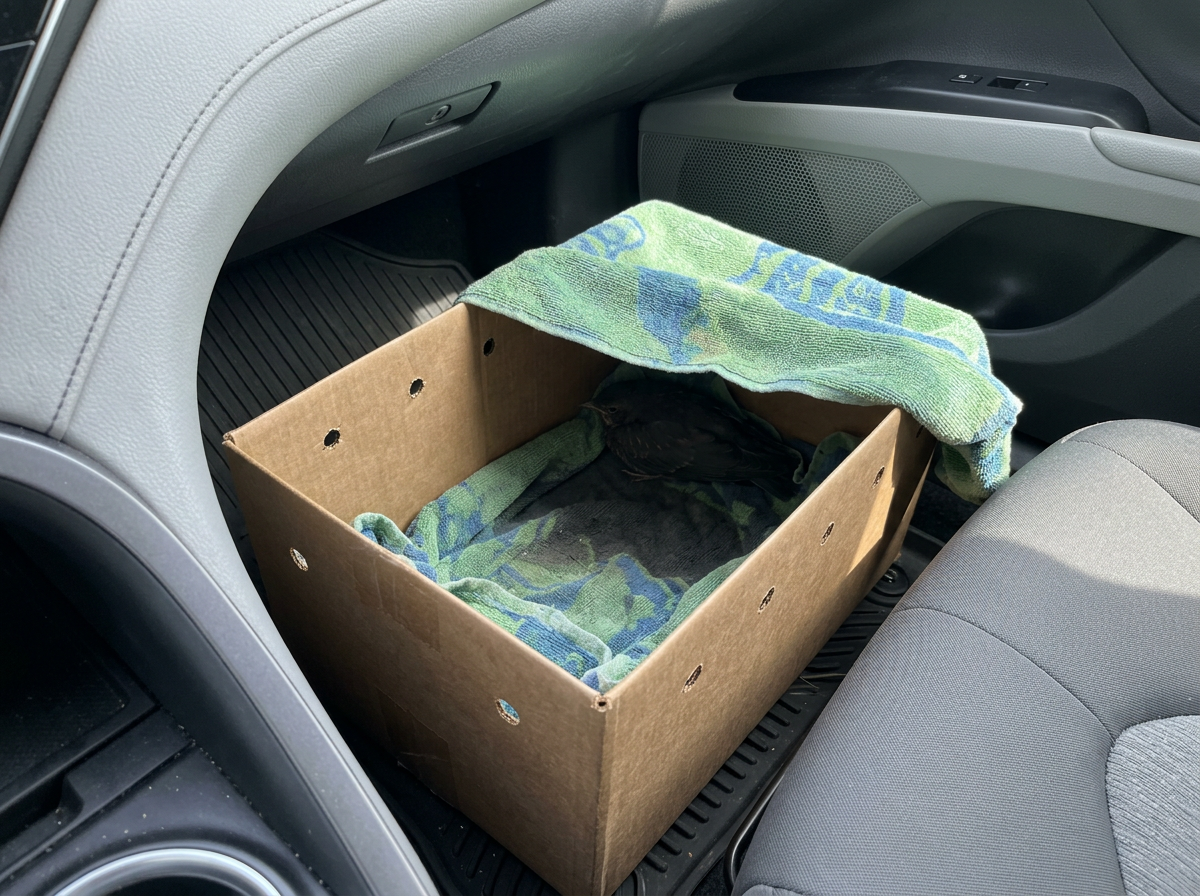
Once you've made the call and the bird is contained, your main job is to do nothing except keep the situation stable. Resist the urge to keep opening the box. Resist the urge to offer food or a little dish of water. Resist the urge to let kids or curious adults have a look. The quieter and darker the bird's environment, the better its chances.
If you're transporting the bird to a vet or carer yourself, here's how to do it safely. Keep the box on the seat or footwell rather than the boot so it doesn't slide around. Keep the car quiet (no loud music) and temperature controlled. Don't open the box during the drive. If you're going to be in the car longer than 30 minutes in warm weather, make sure the ventilation holes are adequate and the car isn't overheating.
Transport do's and don'ts
| Do | Don't |
|---|---|
| Use a ventilated cardboard box with a towel lining | Use a wire or mesh cage |
| Keep the box in a stable position in the car | Put it in the boot where it can slide and tip |
| Keep the car quiet and at a comfortable temperature | Play loud music or have the air con blasting directly at the box |
| Drive directly to the vet or carer without stops | Make detours or leave the bird in a hot car |
| Bring any information about where and how you found the bird | Bring the bird into a busy waiting room uncovered |
| Call ahead so the vet or rescue centre knows you're coming | Arrive unannounced with no information about the bird |
Your immediate next steps checklist
- Make sure the scene is safe for you and the bird is contained away from threats
- Wrap the bird in a towel and place it in a ventilated box lined with a cloth
- Put the box somewhere dark, quiet, and warm (use a warm water bottle under half the box if needed)
- Call Wildlife Rescue Australia on 1300 596 457, Wildlife Victoria on (03) 8400 7300, or your nearest avian vet
- Tell the rescuer: species or description, location, what happened, what injuries you see, how long you've had the bird
- Leave the bird alone until a rescuer arrives or you transport it
- Do not give food, water, or any medication
- If transporting, keep the box stable and the car quiet
The steps you take in the first hour genuinely matter. Keeping a bird warm, dark, and unstressed while getting it to the right people is exactly what trained wildlife rescuers ask the public to do, and it's completely achievable even if you've never handled a bird before. You've already done the hard part by deciding to help. Now make the call, and let the professionals take it from there.
FAQ
Can I give the injured bird something to eat or drink while I wait for help?
In most cases you should not. Even tiny amounts of food or water can cause choking, aspiration into the lungs, or harm if the species has special dietary needs. If the bird is alert enough to drink on its own, that’s still something to leave until a rehabilitator assesses it. Focus on containment and warmth, then call a rescue line.
How warm should the box be, and how do I avoid overheating the bird?
Warmth helps, but overheating is a real risk. Use a heat source under only one half of the container, and ensure the bird can move away from it. If the bird’s feet feel very hot or it looks like it’s trying to avoid the warmth, move or reduce the heat.
What container should I use if I don’t have a towel or ventilated box ready?
Don’t use a wire cage if you have a safer option. Bars increase panic and can lead to further injury from thrashing or battering the head and wings. A lidded cardboard box or plastic container with ventilation holes is safer and less stressful.
How many times should I check the bird after I put it in a box?
It’s usually better to limit handling to minimize stress and reduce the chance of making injuries worse. If you must move it, do so quickly and support the body with a towel drape, keep the bird contained immediately, and then leave it alone. Constantly checking can prolong shock.
What if the bird is bleeding and I don’t have anything “medically clean”?
If you notice a bleeding wound, apply very gentle pressure with a clean cloth or tissue, and stop once bleeding slows. Avoid cotton wool because fibres can stick to wounds, and avoid aggressive cleaning or removing debris, since that can damage tissue and increase stress.
What should I do if the injured bird is cold to the touch?
If the bird is cold, get it into a warm, dark, quiet container promptly, using the half-box heat method. Don’t put it in direct sunlight or under a heat lamp, and don’t use very hot water bottles. Once it’s warm and contained, then call rescue for next steps.
Do I still need to contact a rescue if the bird looks fine after a cat or dog encounter?
Yes, you should call even if there are no obvious injuries when the bird may have been attacked. Cat and dog bites can cause hidden puncture wounds, and infections can develop quickly. Secure the pet, contain the bird, and seek urgent vet or wildlife advice.
Can a stunned window-strike bird be left to recover on its own for a while?
A key exception is temperature and safety. If the bird is fully feathered and appears dazed but has no visible blood or broken limbs, a short recovery period in a dark ventilated box can help. If it cannot fly strongly after 30 to 60 minutes, treat it as injured and call for help.
How can I tell whether a “baby bird” is a fledgling or a nestling and what do I do next?
Fledglings are different from nestlings. If it has most of its feathers, is hopping, and can’t clearly be seen to have an injury, it’s often best to keep pets away and watch from a distance. If it’s pink, has very few or no feathers, or can’t survive on the ground, treat it as a nestling and try to reunite it with its nest or call rescue.
What’s the best way to handle a nestling I found, especially if I can’t reach the nest?
If you can safely access the nest, place the nestling back. If you cannot reach it, the nest is destroyed, or it’s unsafe to try, call a wildlife rescue line immediately. While waiting, keep it warm with the warm-water-bottle-under-the-box approach and do not feed it.
How do I tell if the bird is in shock even if I can’t see a major injury?
If the bird is unresponsive, slumped, fluffed up, or breathing rapidly with cold feet, treat it as shock and act fast. Get it warm under one half of the container, keep it dark and quiet, and contact a rescue line immediately.
What safety gear should I use before touching an injured bird, and what if I’m worried about being bitten?
Raptors and larger birds can scratch or bite even when they appear injured, and small birds can peck reflexively. Use thick gloves if available, or protect your hands by draping a towel over the bird before picking it up.
If I don’t know the right rescue service for my state, who should I call first?
If you aren’t sure who to contact, start with the Wildlife Rescue Australia number, it operates 24 hours a day. If you’re in NSW, the IFAW Wildlife Rescue App can locate the nearest group automatically, and in Victoria Wildlife Victoria can advise via their reporting process.
Next Article
Bird is Injured: What to Do Right Now and Next Steps
Emergency steps for an injured bird: safety, quick checks, safe containment, basic first aid, and who to contact next.