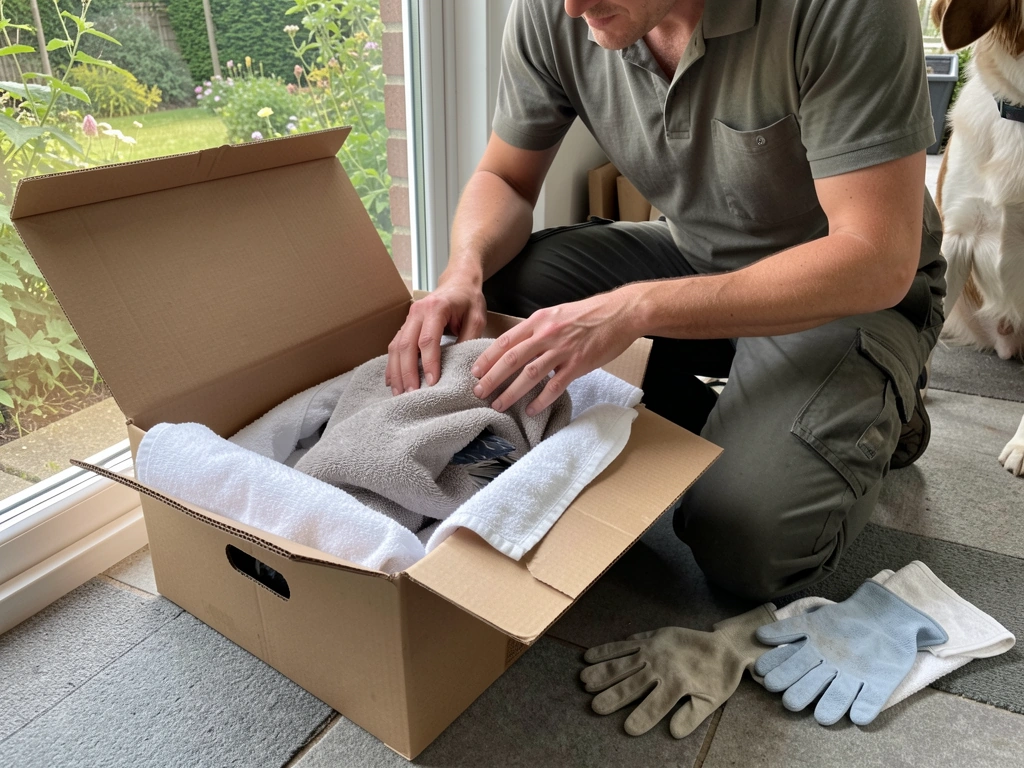
If you're staring at an injured bird right now, here's the short answer: contain it gently in a dark, ventilated box, keep it warm, and call a licensed wildlife rehabilitator or wildlife rescue hotline before you do anything else. Don't feed it, don't give it water, and don't try to treat it yourself. The next few minutes matter, but panicking or rushing into the wrong action can make things worse. Here's exactly what to do, step by step.
Injured Bird What to Do Near Me: Emergency Steps
Marcus Chen
23 Mar 2026
First: Assess the Scene Before You Touch Anything
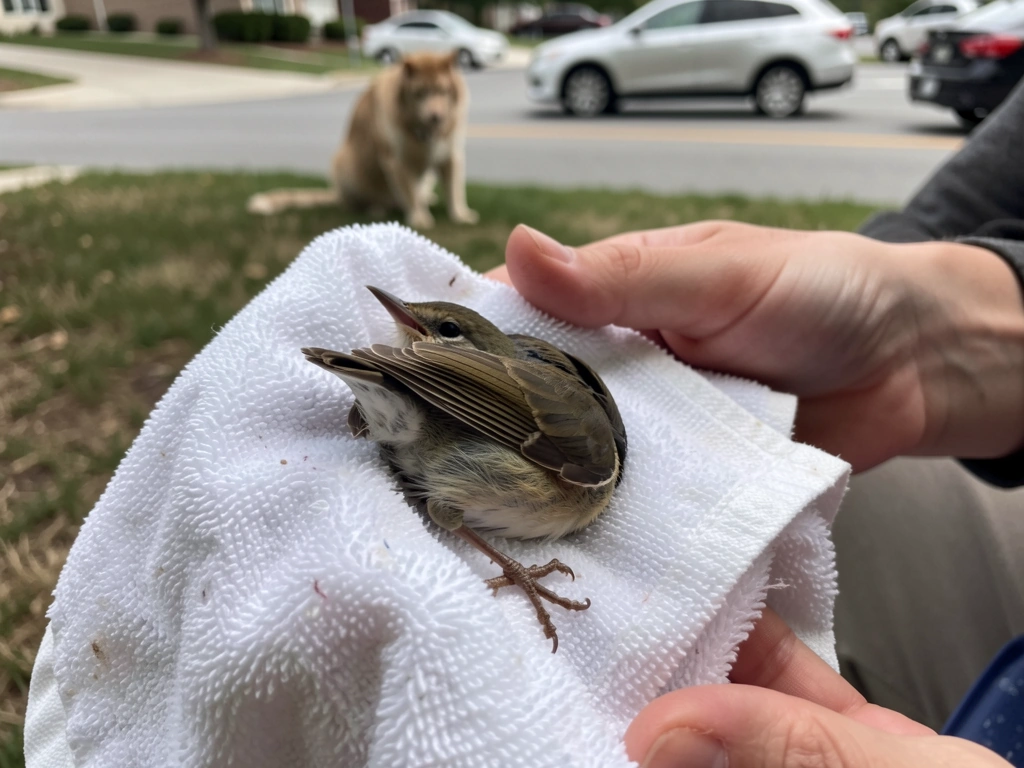
Before you go near the bird, take 30 seconds to look around. Is the bird in immediate danger from traffic, a cat or dog, or an exposed location where a predator could grab it? Your first job is to make the area safer, not to pick the bird up right away. If a cat or dog is nearby, remove or restrain them first. If the bird is in the middle of a road or parking lot, you may need to act faster, but doing so carefully still matters.
Also look for clues about what happened. Did it hit a window? Is there a cat nearby with feathers around it? Was it near a road? Knowing the likely cause helps you give better information when you call for help, and it tells you something about what kind of injury to expect. A window-strike bird may look fine but have internal trauma. A cat-caught bird almost certainly has puncture wounds and a bacterial infection risk, even if you can't see blood.
One important rule before approaching larger birds: if you've found a hawk, owl, eagle, heron, or any large bird of prey, do not approach it until you've spoken with a licensed wildlife rescuer. Birds of prey have powerful talons and beaks, and even an injured one can cause serious injury. Call first. The Avian Wildlife Center runs a rescue line at 973-702-1957, and similar regional hotlines exist across the country. A quick call takes two minutes and could save you a trip to urgent care.
How to Handle, Contain, and Keep the Bird Warm
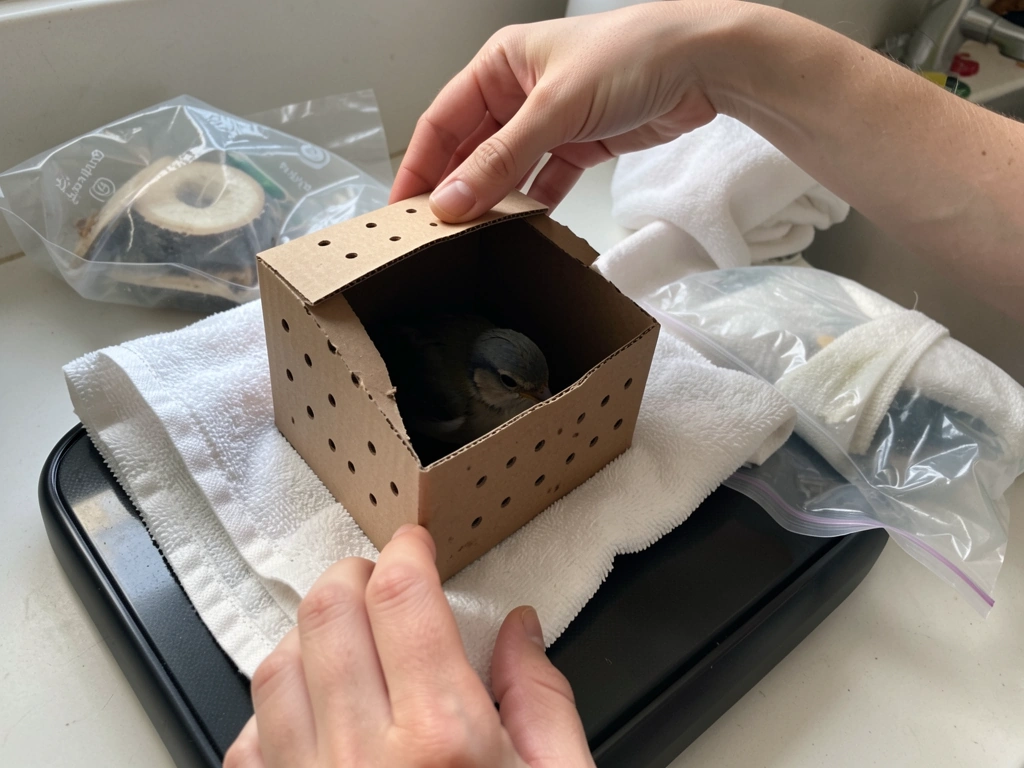
For most small to medium songbirds, you can safely pick the bird up using a light towel, a cloth, or even a jacket. Cover the bird gently from above, then scoop it up with both hands underneath, keeping its wings folded against its body. Don't squeeze. Hold it firmly enough that it can't flap and injure itself further, but don't apply pressure to its chest or it won't be able to breathe.
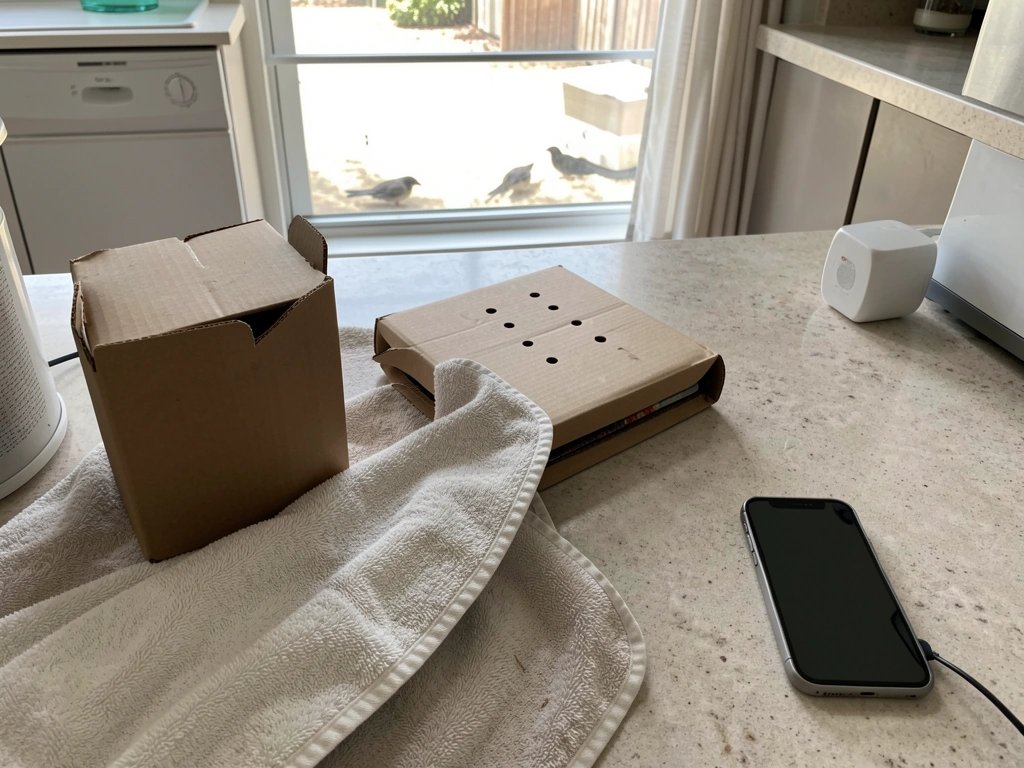
Place the bird into a ventilated container as soon as possible. The NYC Bird Alliance recommends using an unwaxed paper bag, a cloth tote bag with some air flow, or a cardboard box with small air holes poked in the top. Avoid anything airtight, and avoid wire cages or mesh containers where the bird's feet and feathers can get caught. The container should be just big enough for the bird to sit comfortably without much room to thrash around. Darkness actually helps calm birds down significantly, so a closed box with small holes is better than a clear container.
Keep the bird warm. Injured birds go into shock quickly, and cold makes it worse. Place the container on a heating pad set to low (with a towel between the pad and the box), or set it near a warm (not hot) area in your home. A temperature around 85 to 90 degrees Fahrenheit is ideal for most injured wild birds in shock. If you don't have a heating pad, a zip-lock bag filled with warm water wrapped in a cloth and placed next to the box works fine. Don't put the heat source inside the container with the bird.
Once the bird is contained, put it somewhere quiet and dark. A bathroom or closet works well. Don't let kids or other pets near it. Don't keep checking on it every five minutes. The more you disturb it, the more stress you add, and stress alone can kill an already compromised bird.
What to Do Based on the Type of Situation
Bird That's Grounded and Can't Fly
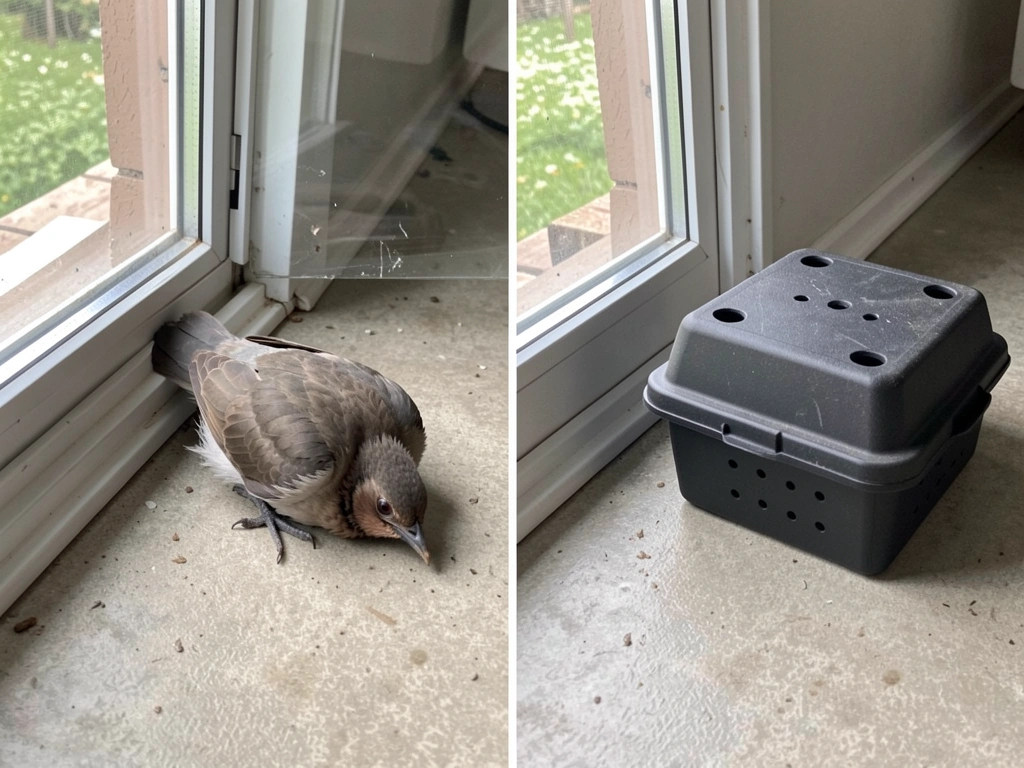
A bird sitting on the ground that doesn't fly away when you approach is almost always in distress. Healthy wild birds don't let people walk up to them. If it's flopping, can't hold its head up, or is just sitting still with eyes closed, contain it immediately and call a wildlife rehabilitator. Don't wait to see if it gets better on its own, especially if it's been sitting in the same spot for more than 20 to 30 minutes.
Bird That Hit a Window
Window strikes are one of the most common bird emergencies. The bird might be stunned and sitting on the ground near your window, or it might be lying on its side. Sometimes these birds recover within an hour, but here's the thing: even if a bird appears to fly away after a window strike, it may have internal bleeding or brain trauma that will kill it hours later. The American Bird Conservancy is clear that most window-strike birds need evaluation from a wildlife rehabilitation center, even if they seem okay. Contain the bird in a dark box for up to an hour in a quiet spot. If it hasn't recovered fully, call for help. If it does seem fully alert and flies off strongly, monitor the area if you can.
Bird That's Bleeding or Visibly Injured
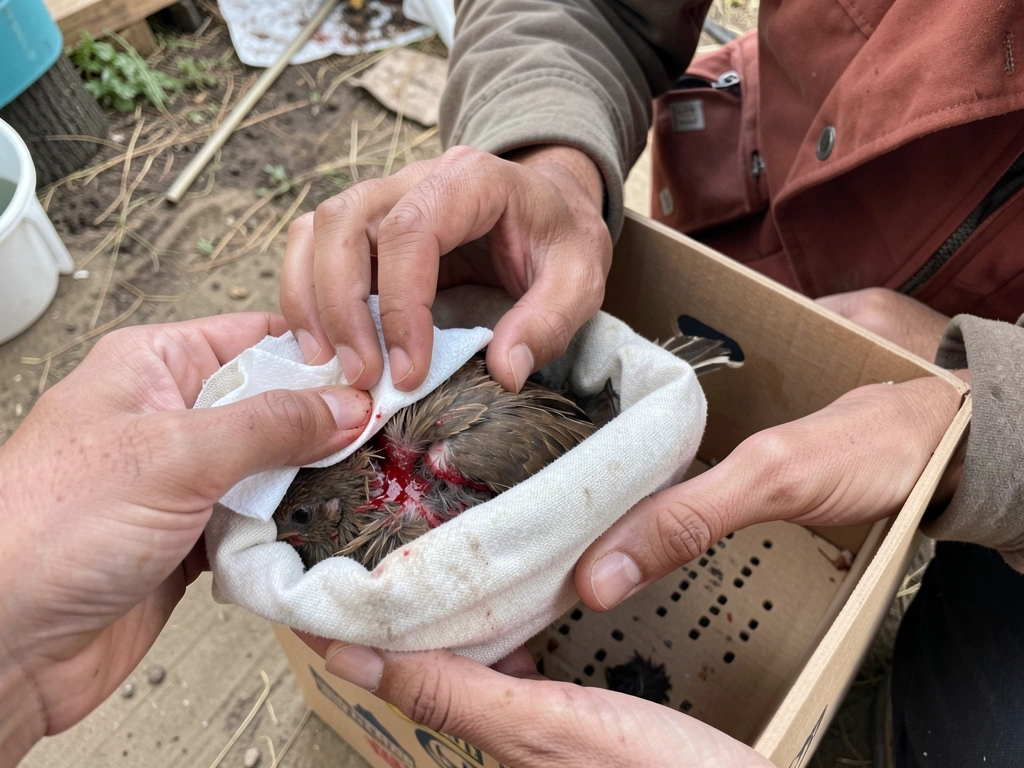
If there's active bleeding, you can apply very gentle pressure with a clean cloth or gauze for a minute or two, but don't wrap the bird tightly or try to splint anything yourself. Get it into a container and get it to a wildlife rehabilitator or emergency vet as fast as possible. Bleeding birds, birds with broken wings hanging at odd angles, and birds that have been in a cat's mouth are all emergencies that need professional care the same day. Cat saliva carries bacteria that cause fatal infections in birds within 24 to 48 hours, even without visible wounds.
Bird Hit by a Car
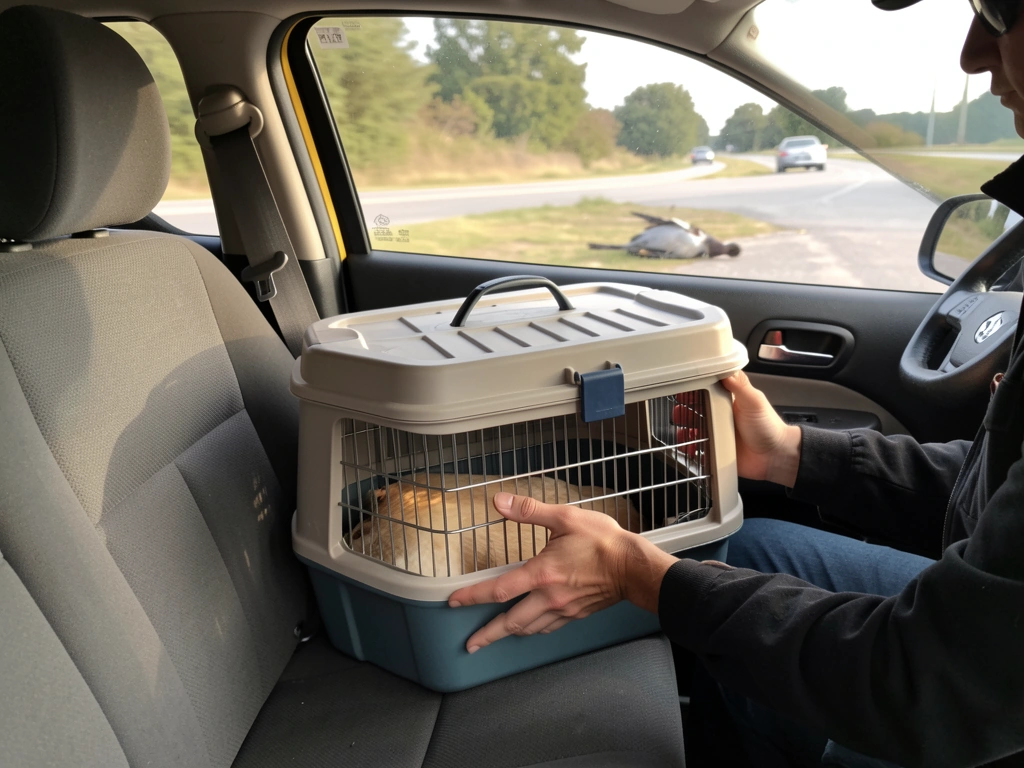
Birds hit by vehicles often have internal injuries that aren't visible. Even if the bird seems alert, assume it needs immediate veterinary attention. Get it contained and call for help right away. These birds can decline very quickly.
Baby Birds: Nestlings vs. Fledglings
This is where a lot of people accidentally make things worse by "rescuing" a bird that doesn't need rescuing. The difference between a nestling and a fledgling matters a lot. A nestling is pink, mostly naked, or has just a few pin feathers, and has its eyes closed or barely open. It cannot survive outside the nest and genuinely needs help. If you find a nestling on the ground, look for the nest nearby and place it back in if you safely can. The myth that parent birds will reject a baby you've touched is false. If you can't find the nest, contain the bird and call a rehabilitator.
A fledgling looks very different. It has most of its feathers, hops around, and may flutter its wings. It can't fly well yet, but that's normal. Fledglings spend days on the ground while their parents continue to feed and teach them. If a fledgling looks healthy, alert, and is in a reasonably safe spot (away from cats, dogs, and traffic), leave it alone and watch from a distance. Moving a healthy fledgling is more likely to harm it than help it. The U.S. Fish and Wildlife Service reinforces this: look for the cause of any actual distress before assuming the bird needs intervention.
What Not to Do (This Part Really Matters)
People mean well, but some common instincts are genuinely harmful to injured birds. Here's what to avoid:
- Don't give food or water. An injured bird in shock can't process food safely, and forcing water into a bird's mouth can cause it to inhale liquid into its lungs, which is fatal. Even if the bird looks hungry, hold off until a professional advises you.
- Don't give milk, bread, or human food. None of it is appropriate for wild birds, and some of it is actively toxic.
- Don't try to splint a broken wing yourself. Without knowing exactly what's broken and how, a DIY splint causes more damage and more pain.
- Don't put the bird in a wire or mesh cage. Feathers and toes catch on the mesh and birds injure themselves trying to escape.
- Don't keep handling the bird to check on it. Every time you open the box, you're causing stress. Once it's contained, leave it alone.
- Don't attempt to rehabilitate the bird yourself long-term. Wildlife rehabilitation requires permits, specialized knowledge, and specific diets. What feels like care often results in a bird that can't survive in the wild.
- Don't release the bird before getting professional advice. Even if it looks better, it may not be fully healed.
Finding Local Help Near You Right Now
Finding the right local resource is the most important call you'll make. Here are the best ways to locate help near you quickly:
- Search for 'wildlife rehabilitator near me' or 'wild bird rescue near me' in Google Maps. Most legitimate wildlife rehab centers have Google listings with hours and phone numbers.
- Go to the National Wildlife Rehabilitators Association (NWRA) website or the Wildlife Center of Virginia's national database and enter your zip code to find a licensed rehabilitator.
- Call your local humane society or SPCA. Even if they don't handle wild birds directly, they almost always know who does in your area.
- Call a local emergency veterinary clinic. Many will treat wild birds in urgent situations or can direct you to someone who will.
- Contact your state's Fish and Wildlife agency. Most state wildlife agencies maintain lists of licensed rehabilitators by county.
- If it's after hours, try local birding groups on Facebook or Nextdoor. Local birders often know exactly who to call and can respond quickly.
When you call, have this information ready: the type of bird if you know it (or a description), where exactly you found it, what likely caused the injury, how the bird is behaving right now, and whether you've already contained it. The more specific you are, the faster the person on the phone can help you figure out what to do next or whether they can take the bird.
Don't be discouraged if the first number you call doesn't answer. Wildlife rehab is largely volunteer-driven and resources vary a lot by region. Try two or three options before giving up. If you're in a rural area with limited options, an emergency vet is always a reasonable backup, especially for birds that are bleeding, severely injured, or were caught by a cat.
How to Transport the Bird and What to Tell Them
Once you've found a place that can take the bird, transport it in the same closed, ventilated box you used to contain it. Keep the car warm (around 70 to 75 degrees Fahrenheit), and drive smoothly. Don't blast the radio or make sudden stops. Place the box on the seat with something on either side to stop it sliding, or put it on the floor with a seatbelt looped through the handle if it has one.
When you arrive or call ahead, here's what to tell the rehabilitation center or vet:
- The bird species or a physical description (size, color, beak shape)
- Where and when you found it
- What you think happened (window strike, cat attack, found in road, etc.)
- The bird's current behavior (alert, eyes open or closed, breathing fast, not moving, etc.)
- Whether there's any visible bleeding or injury you can see
- What you've already done (contained in box, kept warm, not fed or watered)
This information helps the staff prepare for the bird before you even walk in, and it tells them a lot about what kind of care it will need. The more clearly you can describe what you saw, the better.
One last thing: many wildlife rehabilitation centers operate on donations and do this work for free to you. If you have the means, a small donation when you drop off the bird goes a long way. These organizations are often the only reason injured wild birds have any chance of recovery at all, and they almost always need support.
Quick Reference: The Most Common Situations at a Glance
| Situation | Is It an Emergency? | What to Do First |
|---|---|---|
| Window strike, bird stunned | Maybe, monitor for 1 hour | Dark box, quiet spot, call rehab if not recovered |
| Bird caught by cat | Yes, same-day care needed | Contain and call rehab or vet immediately |
| Visible bleeding or broken wing | Yes | Gentle pressure if bleeding, contain, go now |
| Hit by car | Yes | Contain and get to vet or rehab fast |
| Grounded, not flying away | Likely yes | Contain and call for advice |
| Healthy fledgling on ground | Usually no | Watch from distance, only intervene if in danger |
| Naked nestling on ground | Yes | Return to nest if possible, call rehab if not |
| Large bird of prey, injured | Yes, but don't approach | Call licensed rescuer before getting close |
Finding an injured bird is stressful, especially when you feel the pressure to do something right now. But the two moves that help almost every situation are the same: get the bird contained and dark, then call someone who knows what to do. You don't need to have all the answers. You just need to get the bird to someone who does.
FAQ
If I’m the only person around and I can’t reach a box immediately, what’s the best temporary step for an injured bird near me?
Put it in a dark, ventilated container right away, then call. If you truly cannot contain it safely first (for example, it is in heavy traffic), focus on stopping the immediate danger first (get vehicles/cats/dogs away), then contain it as soon as you can. Keep your handling time short, and do not attempt to “walk it” to safety on your own.
How warm should the bird be, and what should I do if I don’t have a heating pad?
Use gentle, indirect warmth. Aim for about 85 to 90°F (around 29 to 32°C) using a heating pad on low with a towel between the pad and the box, or warm water in a sealed bag next to the container wrapped in cloth. Never heat the air in a way that can overheat the bird, and do not put the bird in direct contact with very hot surfaces (or hot water).
What container should I use, and what are the common container mistakes to avoid? (I’m worried I’ll pick the wrong one.)
A clear plastic bin, uncovered clear container, or anything airtight can raise stress and trap moisture or fumes. Use a ventilated cardboard box or paper bag, with small holes for airflow, darkness for calming, and enough space for the bird to sit without excessive thrashing. Avoid wire cages or mesh where toes and feathers can snag.
Can I give an injured bird food or water while I wait for help near me?
Feeding can worsen shock, aspiration risk, and dehydration, and water can be dangerous if it leads to choking. If it is conscious and alert, the priority is still warmth, darkness, and rapid professional help. Do not give food, water, or “bird formulas,” even if the bird looks hungry.
What should I do if there is active bleeding or a wing that looks broken?
If the bird is bleeding, apply very gentle pressure with clean gauze or cloth for one to two minutes, then stop and continue containment and professional contact. Do not wrap tightly, do not splint, and do not attempt surgery or remove embedded objects. Birds with broken wings at odd angles should be treated as same-day emergencies.
What if the injured bird is wet or it’s cold outside, and I’m looking for the quickest safe action near me?
Bring it indoors and reduce stress. If the weather is very cold, you can keep the container in a sheltered warm area, but still do not overheat. If the bird is wet, avoid blowing air directly on it, and do not bathe it. Get it contained and called in, since moisture plus cold can worsen shock quickly.
How do I tell whether I found a nestling versus a fledgling when I’m trying to decide whether to intervene?
Nesting situations depend on what you found. If it is a nestling (mostly naked or with very few pin feathers, eyes closed), place it back in the nest if you can do so safely, otherwise contain it and call. If it is a fledgling (mostly feathered, hopping, partially fluttering), it is often okay to leave it temporarily if it is alert and in a reasonably safe spot, then monitor from a distance.
How often should I check on an injured bird while waiting for the wildlife rehabilitator?
Keep it away from kids and pets, and limit visits to only what’s necessary for safety. Checking every few minutes increases stress and can worsen internal injury. Instead, set the container in a quiet dark spot, confirm it’s ventilated, and wait for the rehabilitator’s instructions.
I found a bird after a cat attack, but I don’t see puncture wounds. Is it still urgent?
If you see a cat nearby, secure or remove the cat first before you approach the bird. Once contained, mention cat exposure immediately when you call, because puncture wounds may be hidden and infection risk is high even when there’s no obvious bleeding. Get help the same day for cat-caught birds.
What if the bird seems calm on the ground but doesn’t fly away near me?
If a bird does not fly away when you approach, treat it as in distress and contain it, even if it seems “calm.” Do not assume it will recover on its own if it has been on the ground for more than about 20 to 30 minutes. Call for help and describe how it’s behaving when you contact them.
What if I don’t know what kind of bird it is, and I’m afraid I might mishandle it?
For an injured bird, the safest rule is containment first, even if you have to improvise. In a pinch, a clean cloth can briefly help you cover the bird from above while you prepare a box, but keep handling gentle and brief. If it’s a bird of prey, do not approach, cover it only from a safe distance if necessary for positioning, and call a licensed wildlife rescuer immediately.
What details should I provide when I call, especially if I’m not the one who can transport the bird?
If you’re calling on behalf of someone else, tell the dispatcher who is currently with the bird, whether the bird is already contained, and whether there are ongoing hazards (traffic, pets, active bleeding). Also share the exact location you found it (street, entrance, landmark) so the responder or hotline can advise quickly.
Next Article
Wild Bird Hurt: What to Do Right Now Step by Step
Step by step wild bird hurt guide: triage, safe handling, what not to do, and when to call rehab.